How solar shades work
A tight mesh that stops a share of the sun and leaves the view behind it.
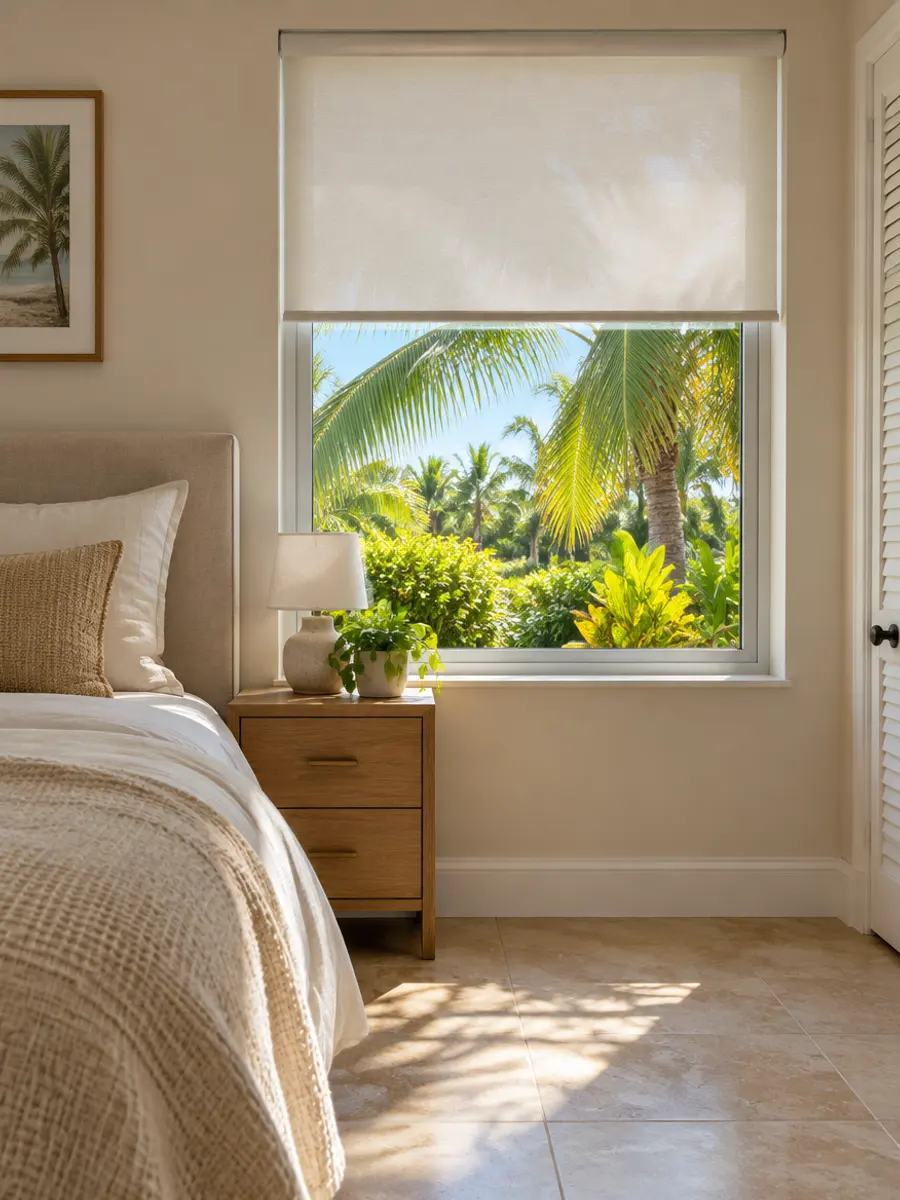
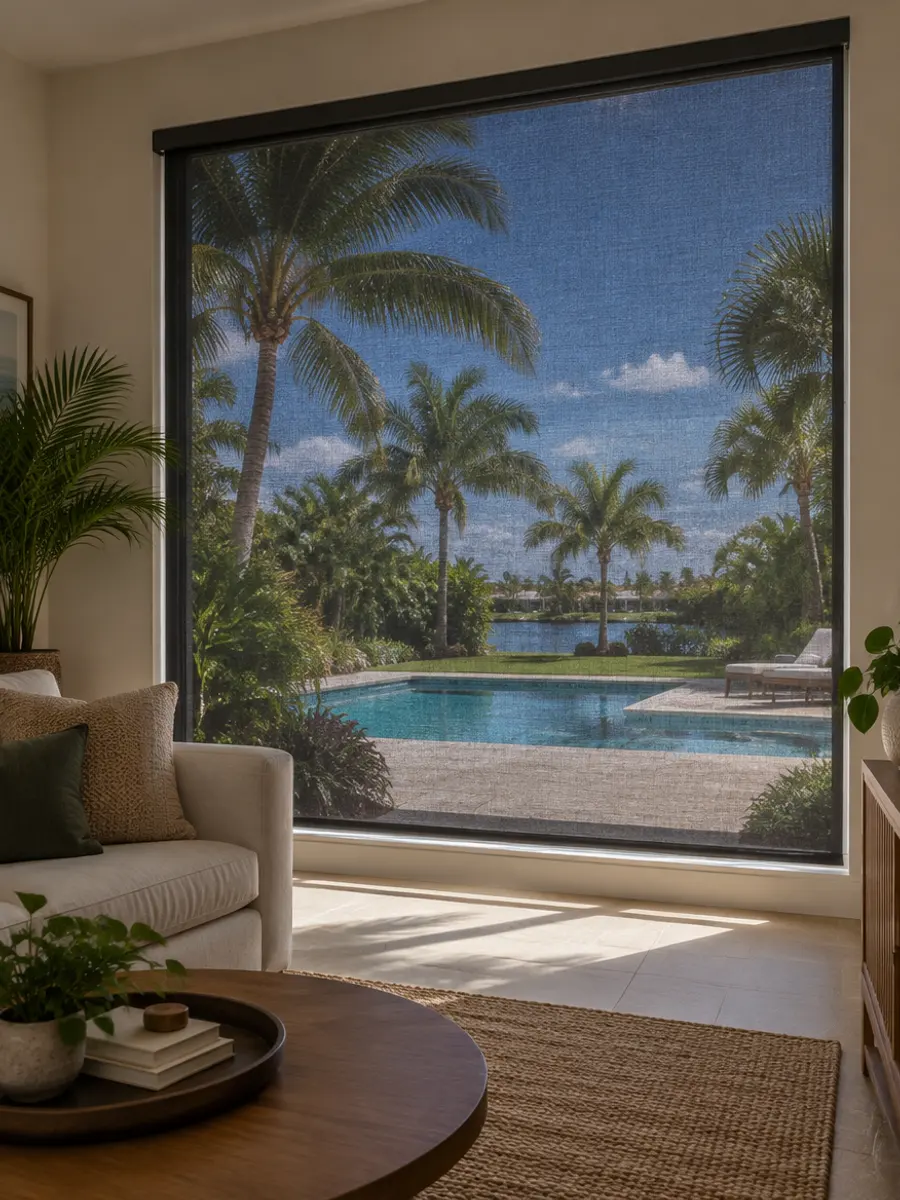
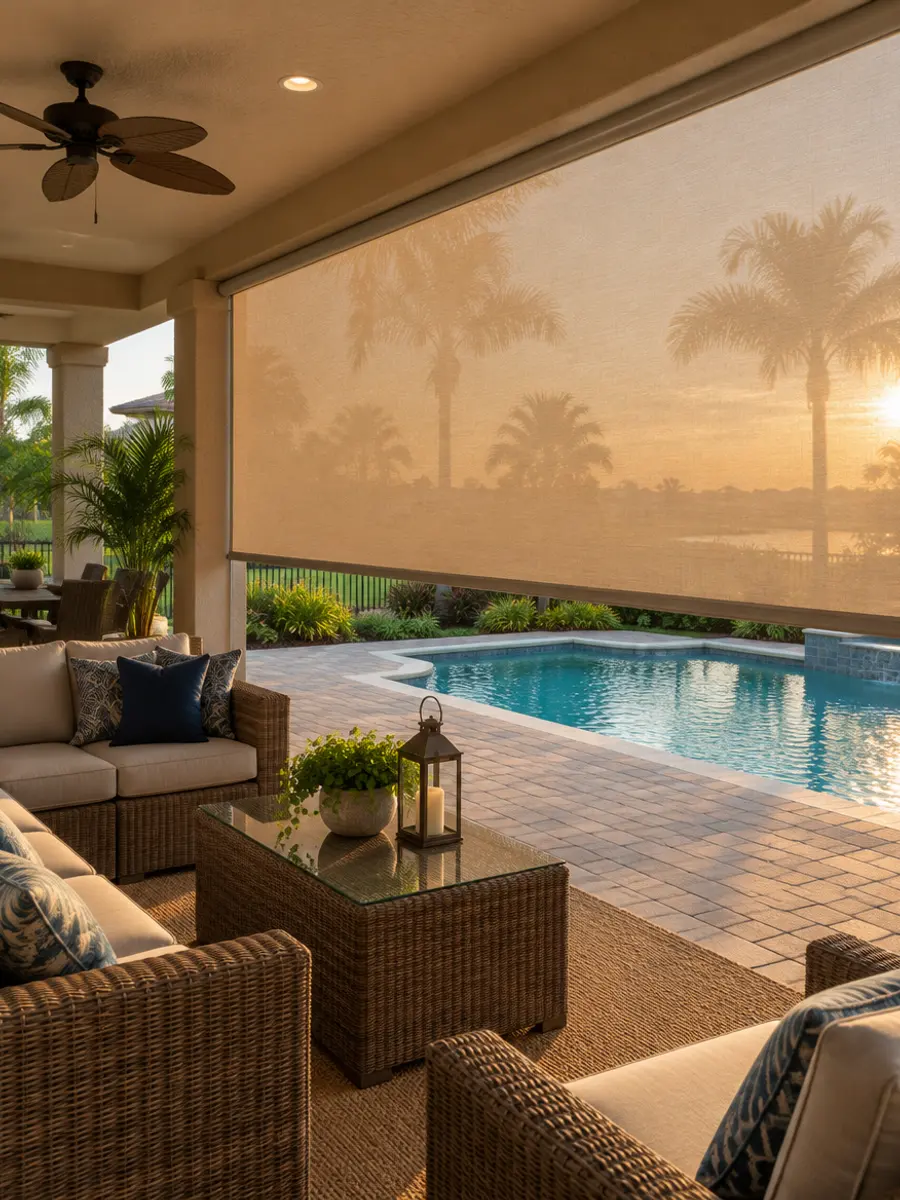
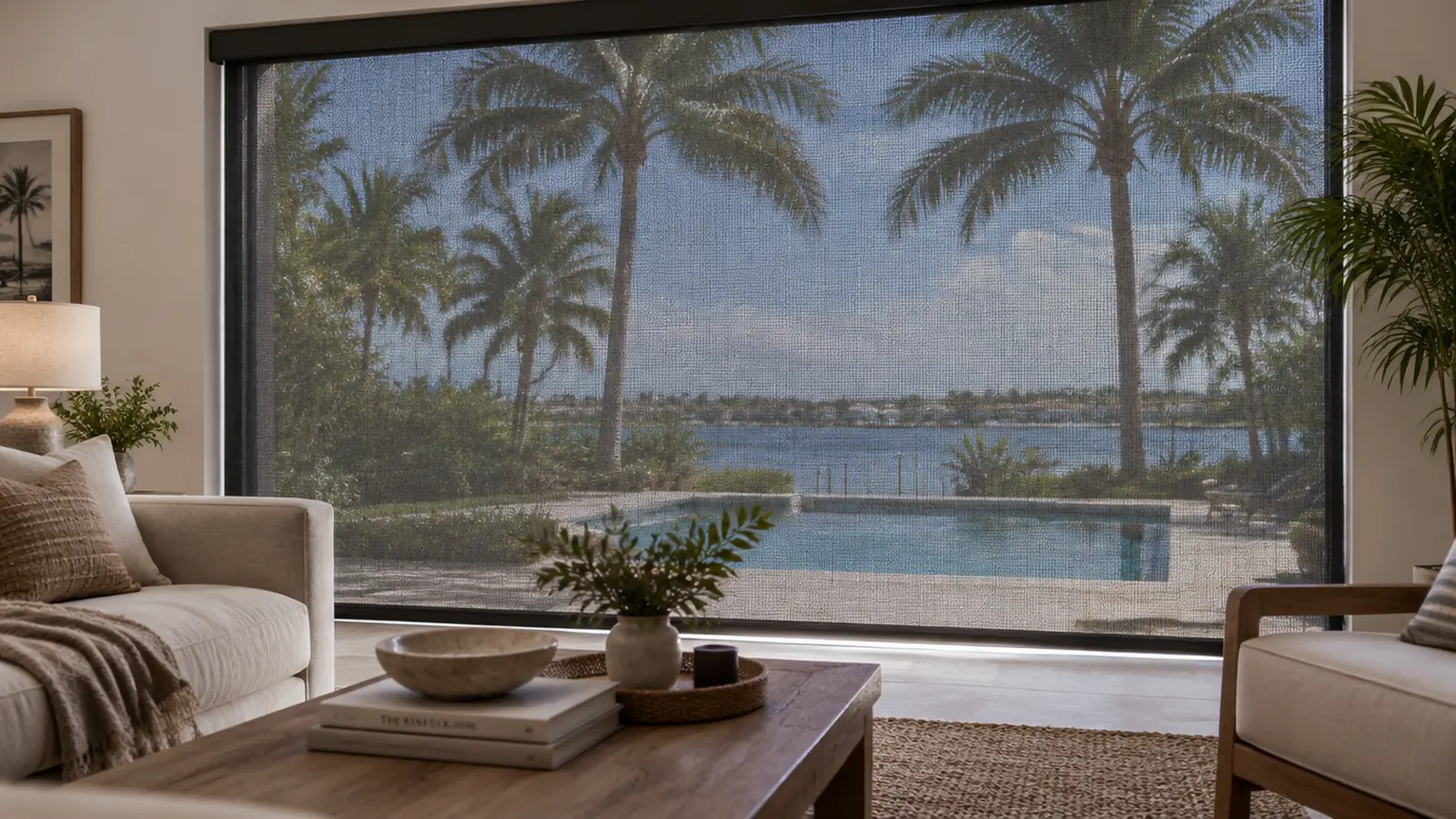
A solar shade is a roller shade with a woven mesh instead of a solid fabric. The weave is tight enough to block a large part of the sunlight and the heat it carries, and open enough that you can still see through it, in the same way you can see through a screen door while standing in the shade behind it.
That is the trade the whole product is built on. You are not closing the window off; you are putting a filter in front of it. The glare comes off a television or a laptop, the room stops being uncomfortable to sit in, and what is outside is still there.
Where solar shades do best in a South Florida home
Any window with a view you paid for.
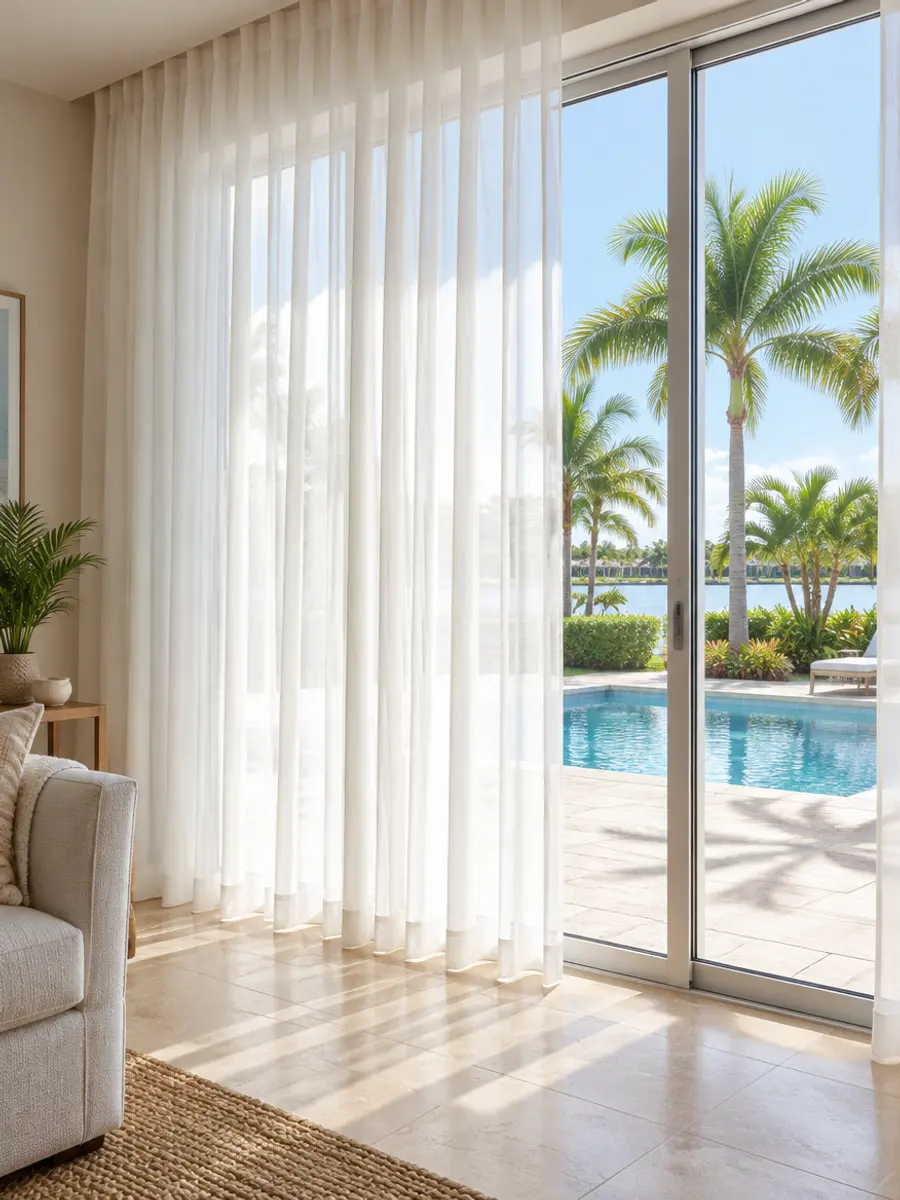
Water, a garden, a golf course, a city skyline from a tower. These are the windows where a conventional shade solves the glare by removing the reason the window is there. A solar shade is the answer to that specific conflict, and it is why so many of them go into condos along the coast.
They also work hard in an office or a television room, where the complaint is reflections on a screen rather than heat. The limitation is at night: once your lights are on inside, the contrast reverses and people outside can see in.
That is not a flaw to be engineered around, it is how the product works, so a bedroom or a ground floor room on a street needs something else as well.
What you choose
The openness, and the color of the mesh, which matters more than people expect.
Openness is the share of the weave that is open space, and it is the main decision. One percent is nearly solid: the most heat stopped, the most daytime privacy, the least view.
Fourteen percent keeps much more of the view and stops noticeably less. Most living rooms land between three and five percent, and the right number depends on how strong the sun on that window actually is.
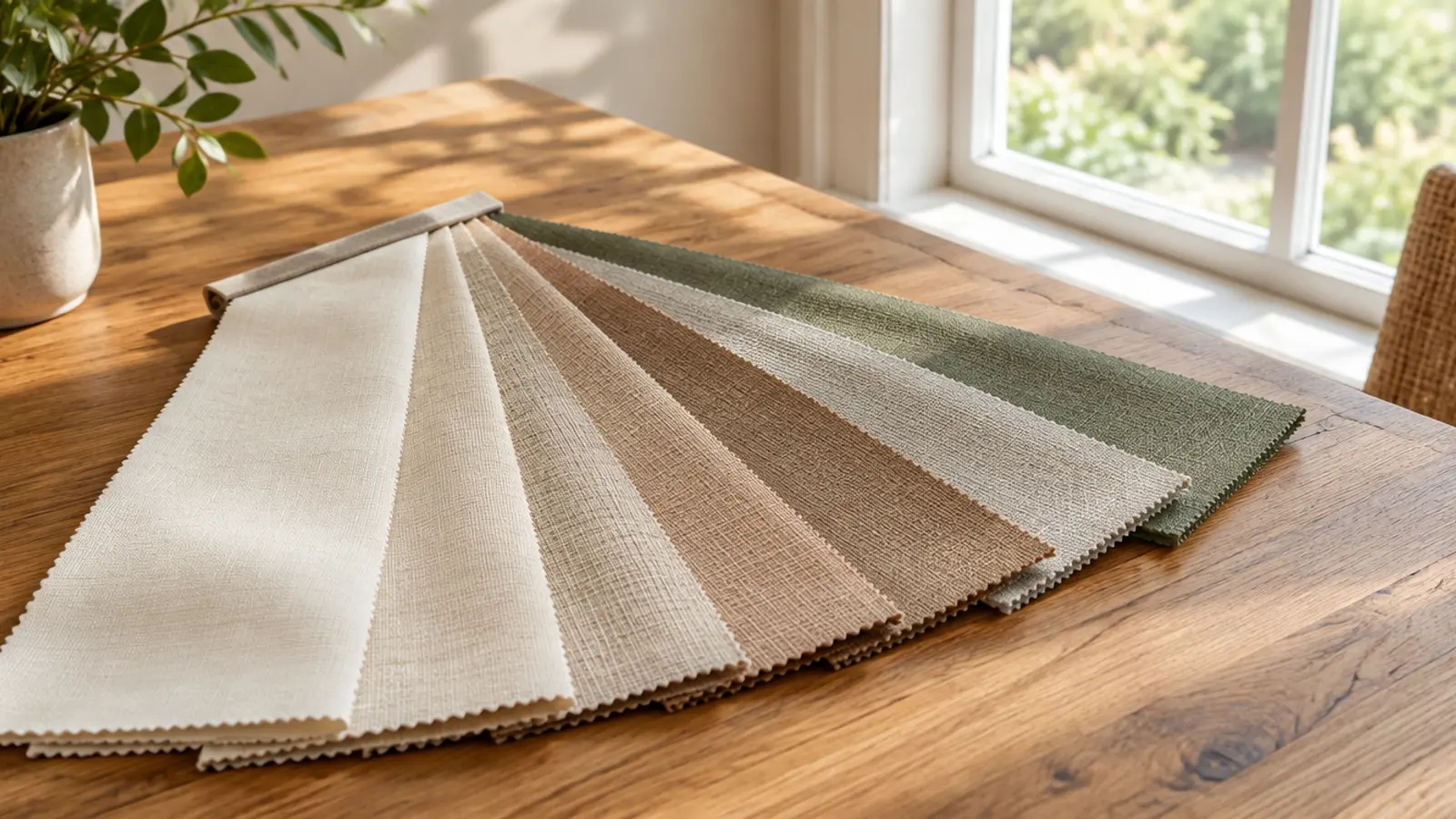
Color changes the result more than the number does. A dark mesh cuts glare better and gives the clearest view out, because your eye is looking through dark threads rather than bright ones, but it absorbs heat.
A light mesh reflects more heat away from the room and scatters the light, which makes the room brighter and the view hazier. Dark for the view, light for the heat, is the short version.
Motorized solar shades
These go on tall glass more often than any other shade, which is exactly where a motor stops being optional. On a schedule they drop before the sun comes around and lift again in the evening, so the view is never given up for longer than it needs to be. See how motorization works.
Pairings
What people pair them with
Very few windows end up with one thing on them, and the combinations below are the ones that come up most.
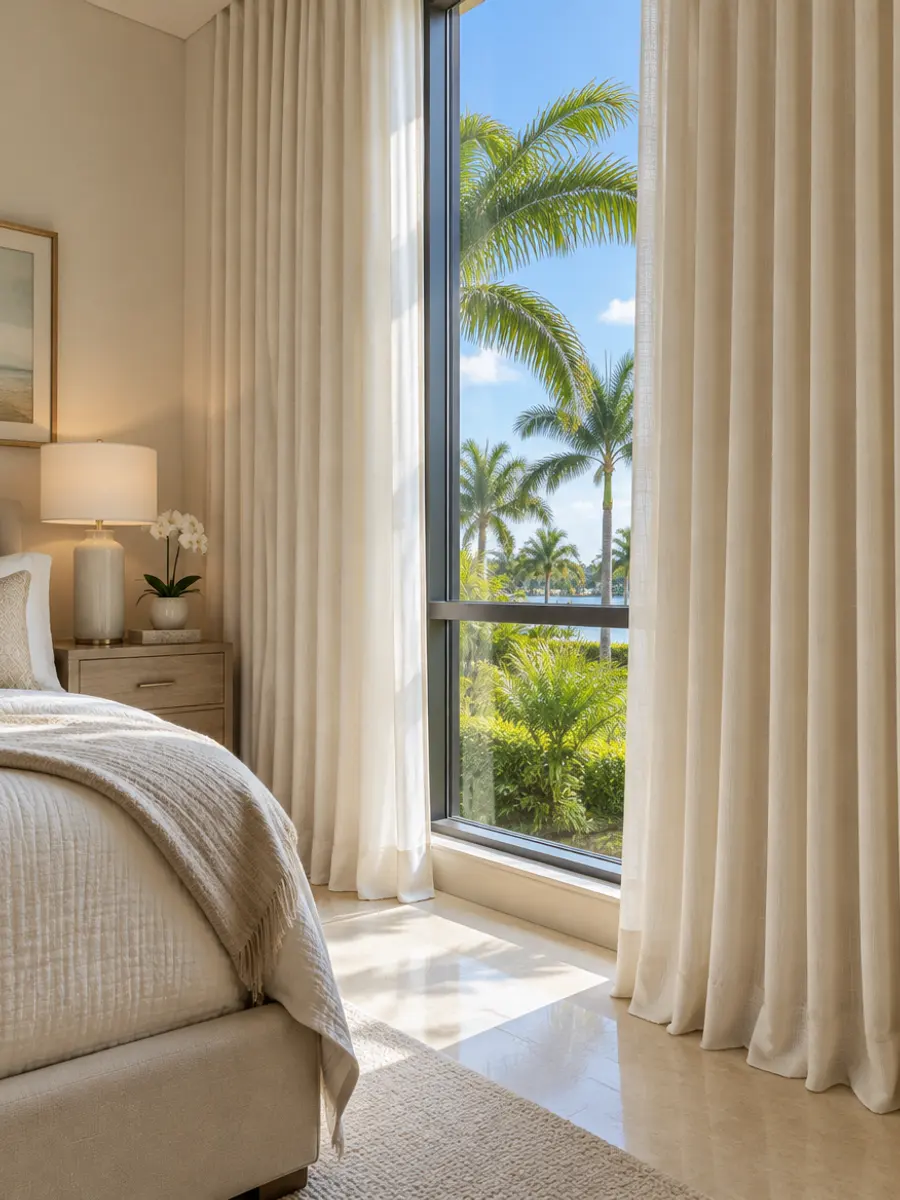
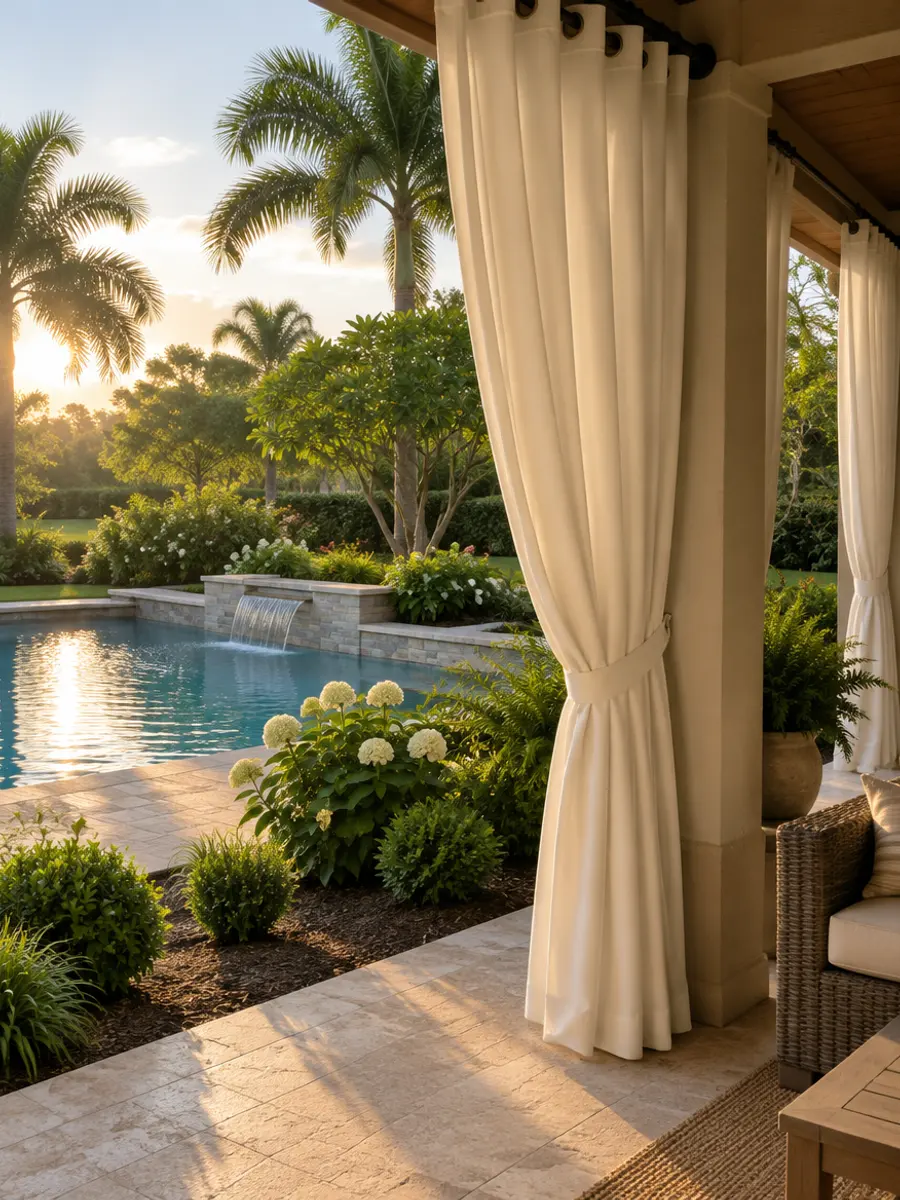
The natural pairing is drapery panels either side. The solar shade handles the sun and keeps the view through the day, and the panels close at night for privacy and the dark, which is the one thing a solar shade will never do.
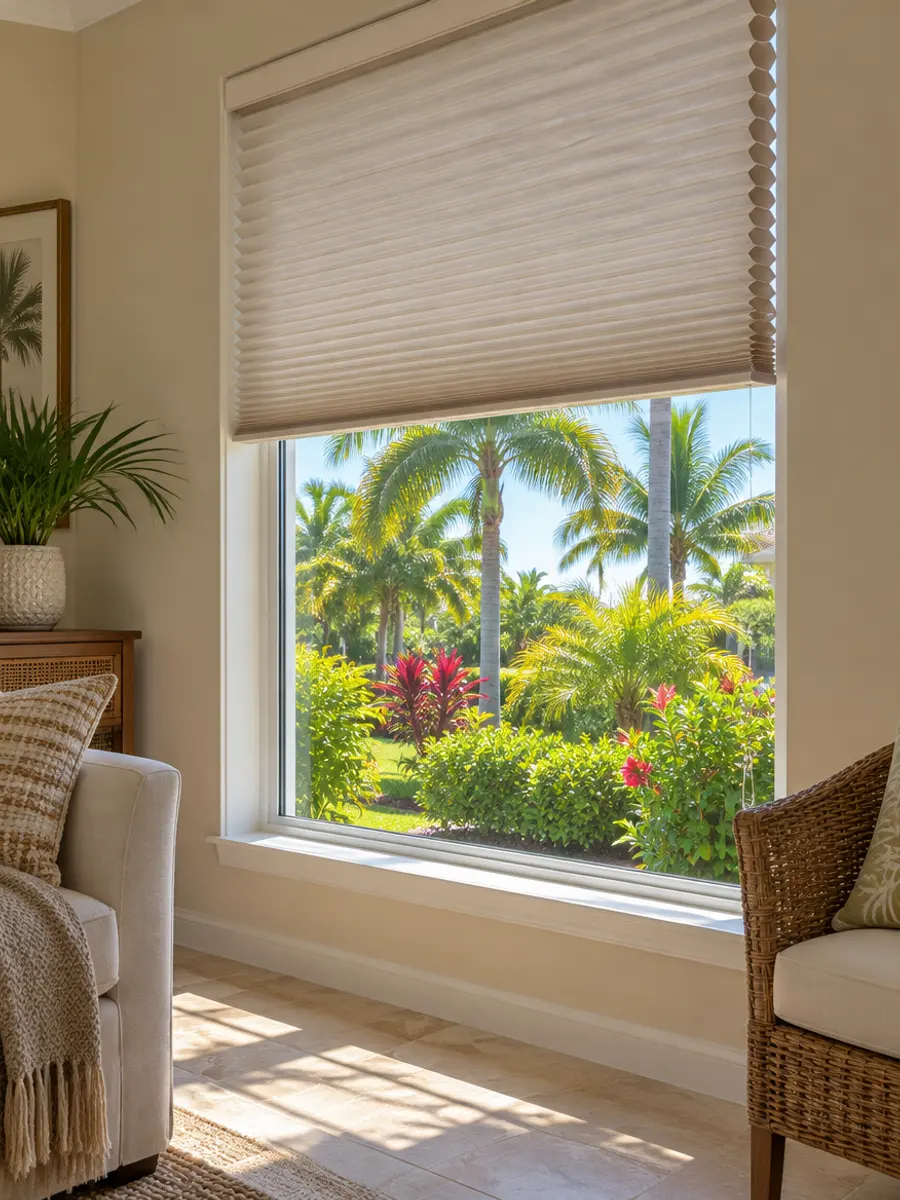
Where the heat is severe rather than the glare, a cellular shade does more, because it insulates rather than filters. Some houses run a solar shade for the day and a blackout roller behind it for the night on the same window, which is two shades on one opening and still cheaper than regretting the choice.
One last thing people ask about late. A solar shade and a blackout shade can share a window on two separate rollers, so you use the mesh through the day and the blackout at night. It costs more than one shade and far less than regretting the choice.
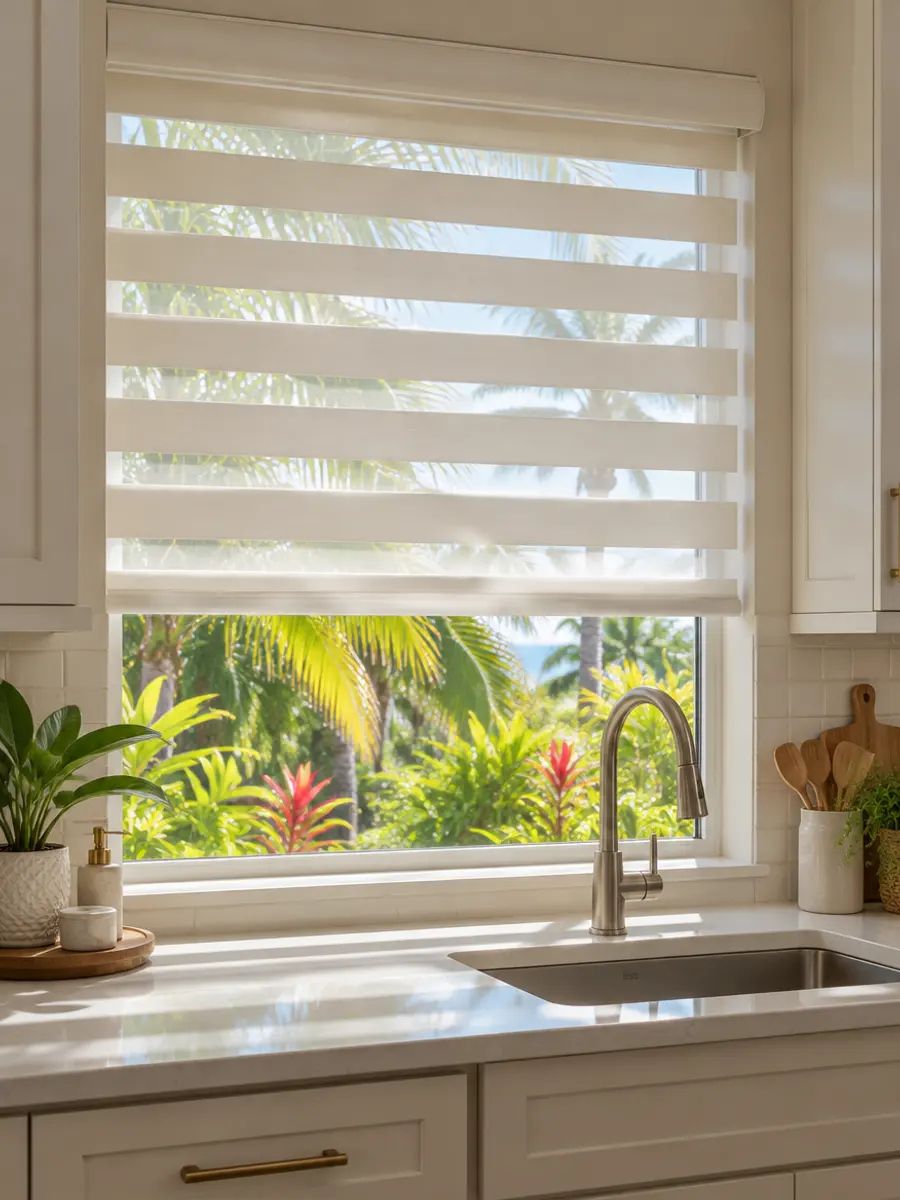
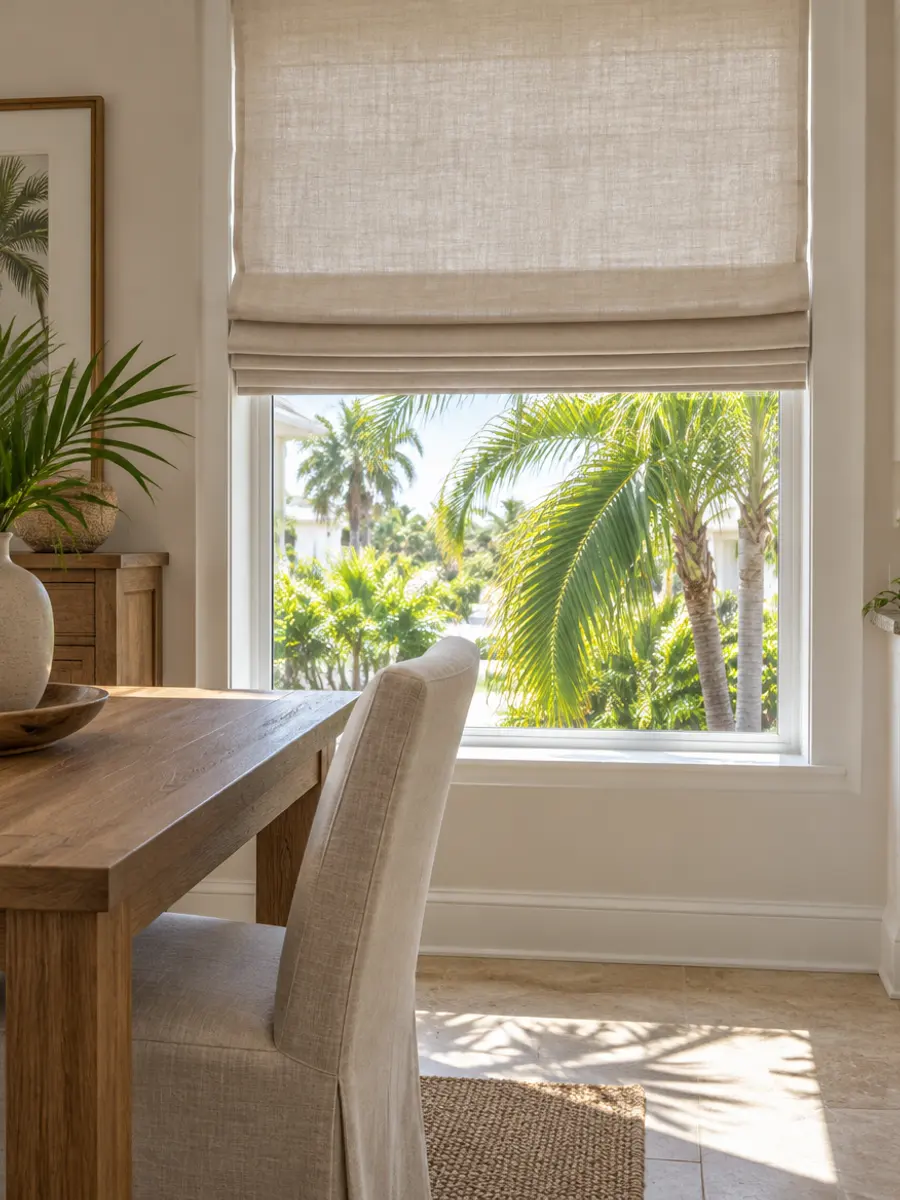
The rest of the shades we make are roller shades , zebra shades , cellular shades and roman shades , and we will bring samples of whichever ones suit the room.
Before you book
Questions about solar shades
Anything not answered here gets answered at the appointment, and it costs nothing to ask.
Are solar shades and sheer shades the same thing?
The terms overlap and people use them interchangeably for this product. Be careful though: some manufacturers use sheer shade to mean a completely different shade with fabric vanes floating between two sheer layers. Ask what the openness is, and you will know which one you are being shown.
What openness should I pick?
Three to five percent suits most living rooms. Go toward one percent if the sun on that window is punishing or you want more daytime privacy, and toward ten or fourteen if the view is the reason you are buying and the sun is manageable. We bring samples so you can look through them at your own view.
Can people see in during the day?
Not in any detail, because it is brighter outside than in. After dark that reverses completely and the room becomes visible, which is why we do not recommend a solar shade on its own for a bedroom or a ground floor room facing a street.
Do they stop heat as well as cellular shades?
No. A solar shade blocks sunlight before it becomes heat, which helps a great deal on a sunny window, but a cellular shade insulates the glass itself and does more once the heat is there. For the hottest window in the house, cellular wins.
Dark mesh or light mesh?
Dark if the view is the priority, because you see through it far more clearly. Light if heat is the priority, because it reflects more of it away. Hold both against your own window at the appointment, since the difference is obvious in person and invisible in a photograph.
I'd like to explore my options
Let's make your home feel complete. We will reach out and help you get started.