How sheer curtains work
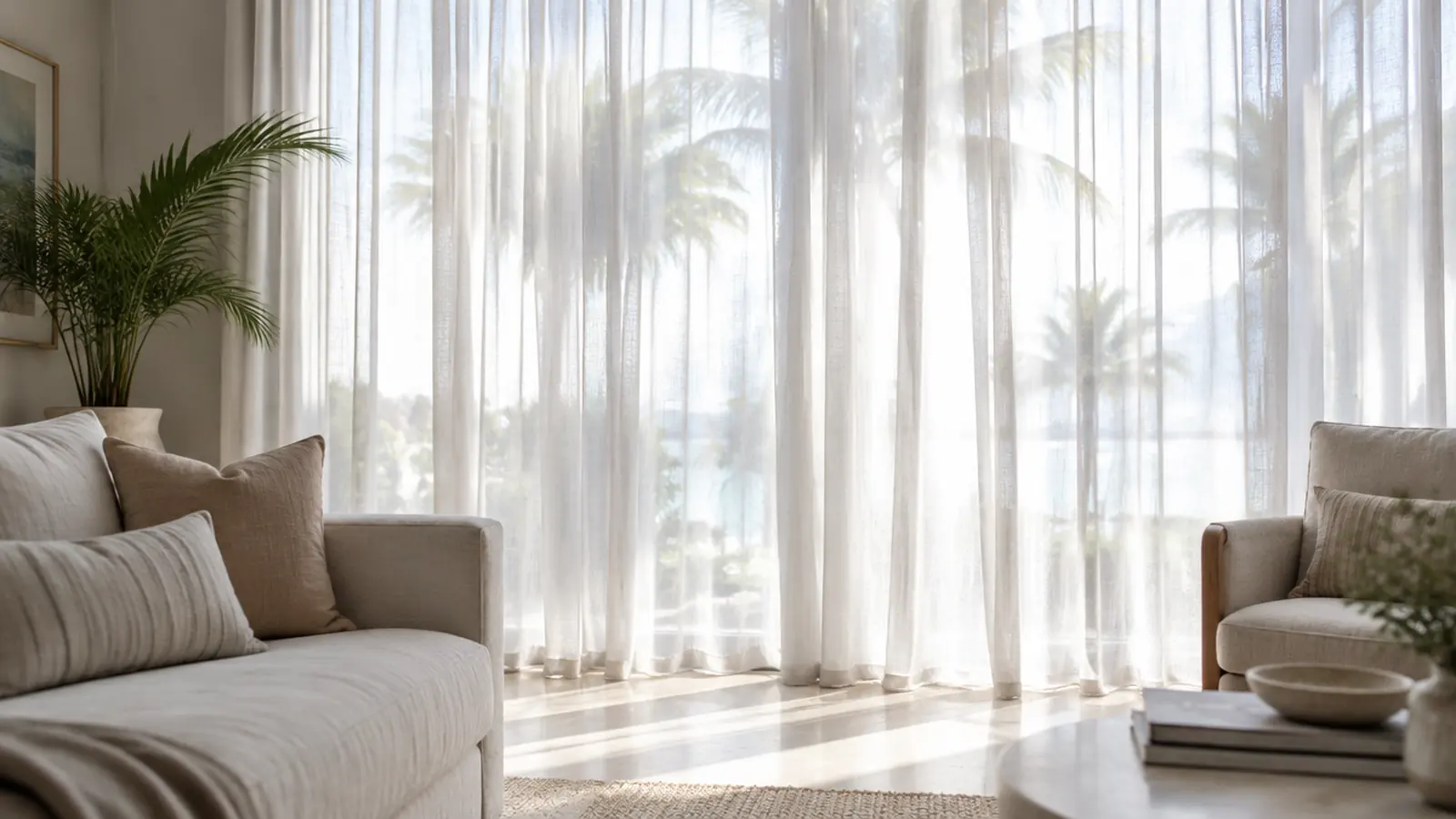
An open weave scatters the light coming through it instead of stopping it.
A sheer is a loosely woven fabric, light enough that daylight passes straight through. What the weave does is break the light up, so a hard beam of afternoon sun arrives in the room as a soft general brightness rather than a bright stripe across the floor.
It also moves. Sheer fabric is light enough that it lifts when the air conditioning comes on or a door opens, and a room with something moving in it feels different from a room where everything is fixed. That is a real reason people hang them, and it is not a reason any solid treatment can offer.
Where sheer curtains do best in a South Florida home
In front of a shade, on a window that is already private.
The most common fitting is sheers over a shade. The sheers stay closed all day and do the softening, and you draw the shade behind them for privacy and darkness at night. That way the window looks dressed at every hour without anything being opened and closed twice a day.
On their own, sheers suit a room that already has privacy: an upper floor, a window facing a garden wall, a lanai side of the house where nobody walks past.
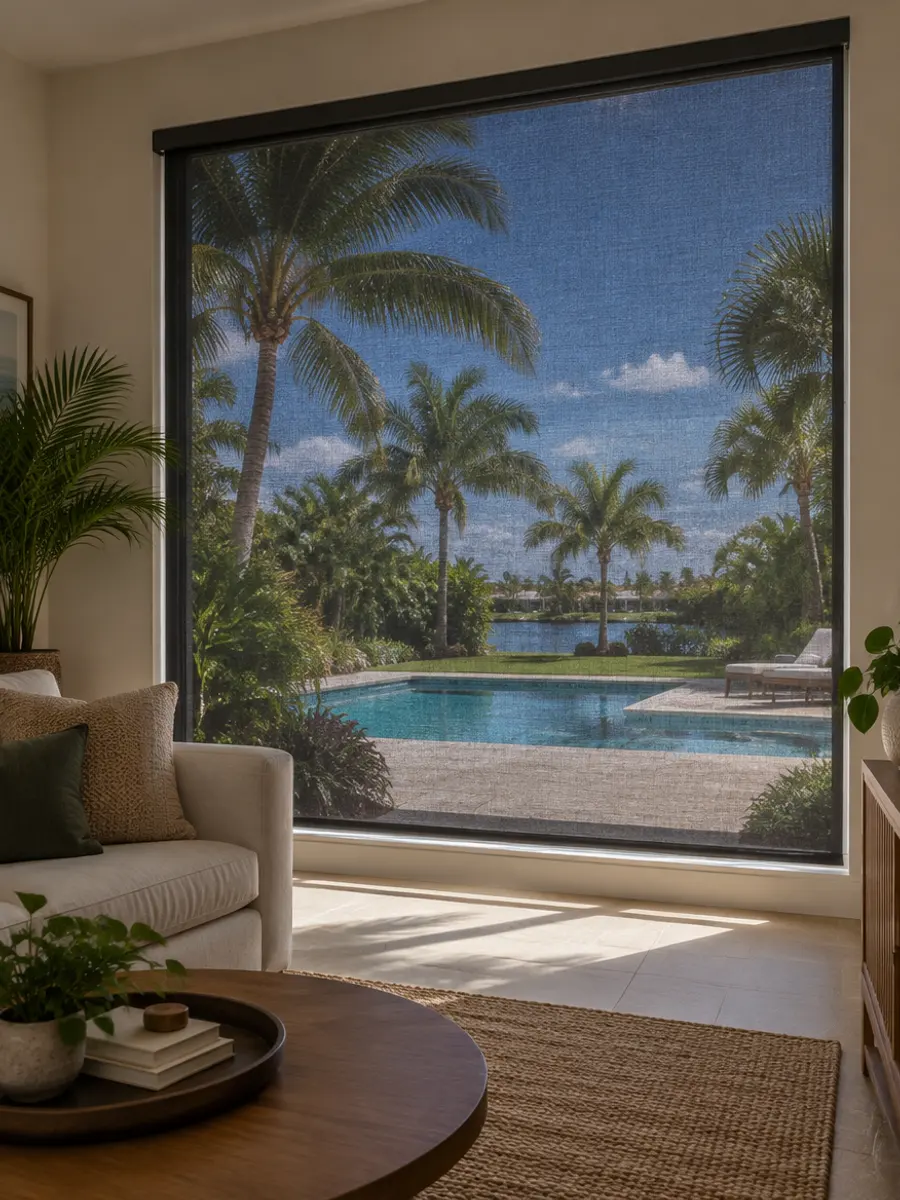
They also work across a wide slider, where a solid panel would be a lot of fabric and a sheer keeps the room bright while taking the hardness off the glare. What they will not do is give privacy or darken anything, and anybody who tells you otherwise is selling you the wrong product.
What you choose
How open the weave is, the color, and how much fabric goes into the width.
A very open weave is barely there and moves the most. A tighter sheer, sometimes called a semi-sheer, softens more light and gives a little daytime privacy, at the cost of some of the airiness. Most people land tighter than they expect once they see both against a real window.
Color matters because a sheer is lit from behind for most of the day. White looks bright and clean, a warm cream takes the blue edge off strong daylight and makes a room feel warmer, and a darker sheer looks like a filter rather than a curtain.
Fullness is the last call: sheers need generous width to look like fabric rather than a flat panel, so they usually take more width than a lined drape would.
Motorized sheer curtains
A motorized traversing rod suits a wide run of sheers across a slider, where pulling by hand means walking the length of the glass. Where sheers and panels are layered, a double rod can run both on their own schedules. See how motorization works.
Pairings
What people pair them with
Very few windows end up with one thing on them, and the combinations below are the ones that come up most.
Drapery panels are the natural partner, and the layered pair is what most of our drapery work actually is. Sheers do the day and the panels do the night, on a double rod so each moves on its own.
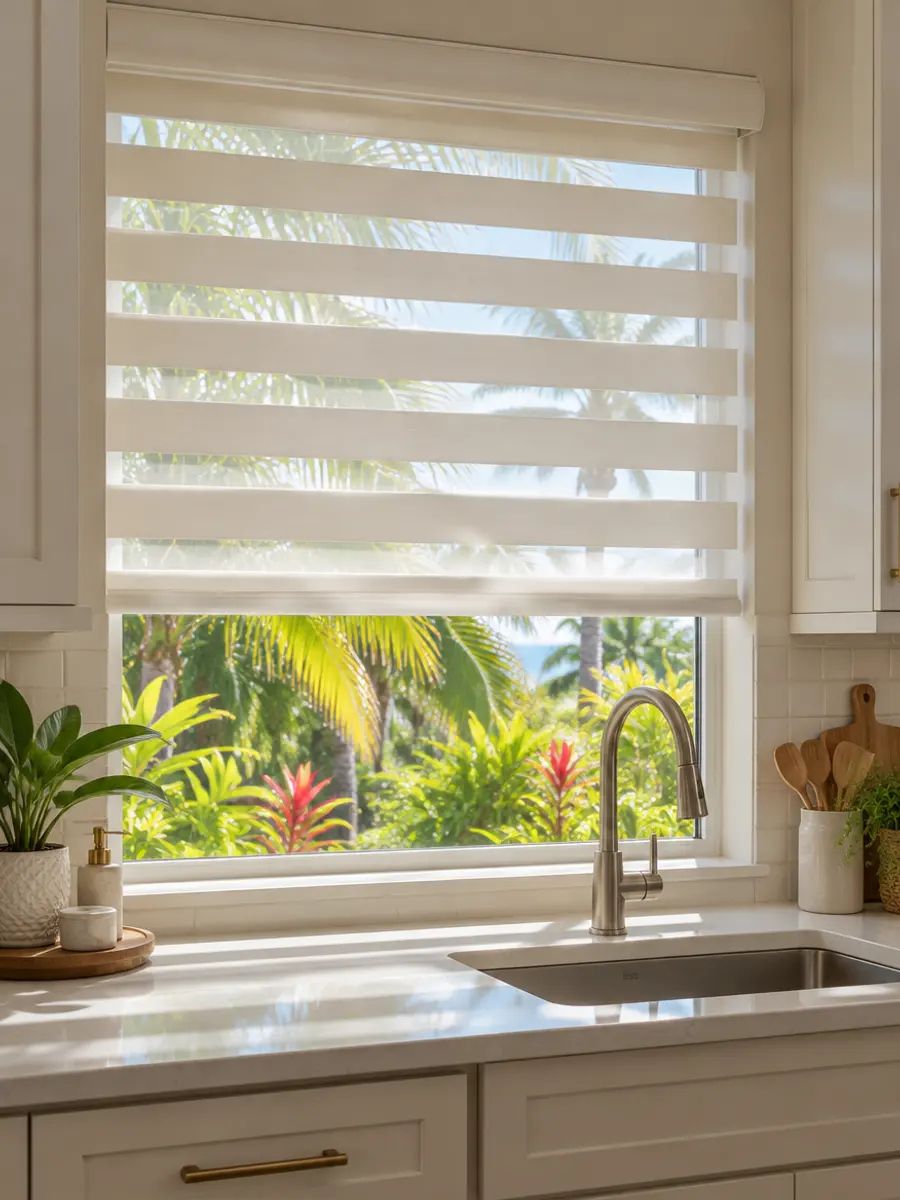
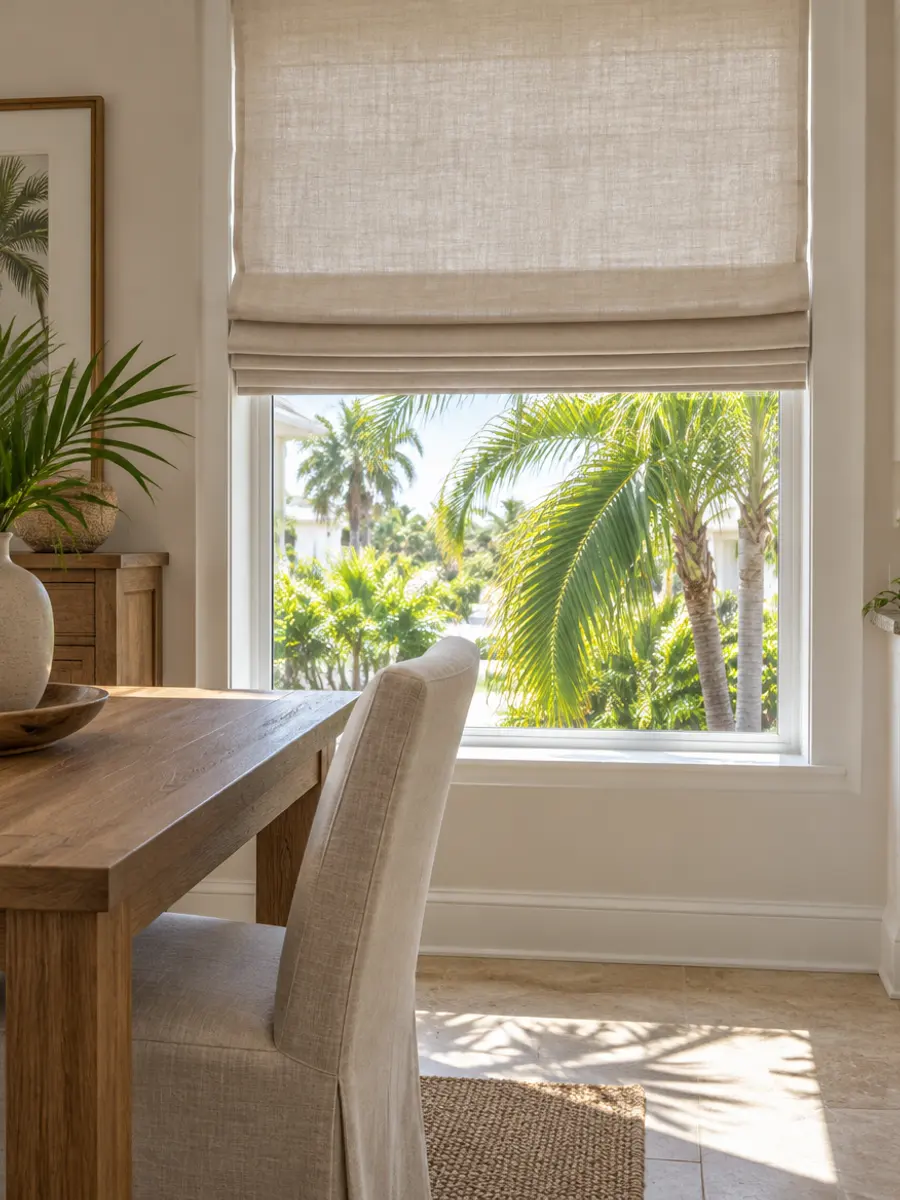
Over a roller shade or a zebra shade, sheers add fabric to a window that would otherwise be all hardware. Over a roman shade they are usually too much, since both are soft and the opening starts to look crowded.
Length matters more with sheers than with a heavy panel. Because light passes through the fabric, the hem is visible as a line against the wall, and a sheer stopping two inches above the floor looks like a mistake rather than a choice. Floor length is almost always the answer.
Static is the one quiet annoyance with hanging sheers in a house that runs the air conditioning hard. Very light synthetic fabric clings to itself and to a nearby wall when the air is dry, which is not a defect but is worth knowing. A slightly heavier weave, or a linen blend, largely settles it.
Hems are worth deciding early. A sheer stopping short of the floor shows the line against the wall, because light is coming through the fabric rather than past it. Floor length is almost always the right call, and it is the detail that separates a made panel from a packet off a shelf.
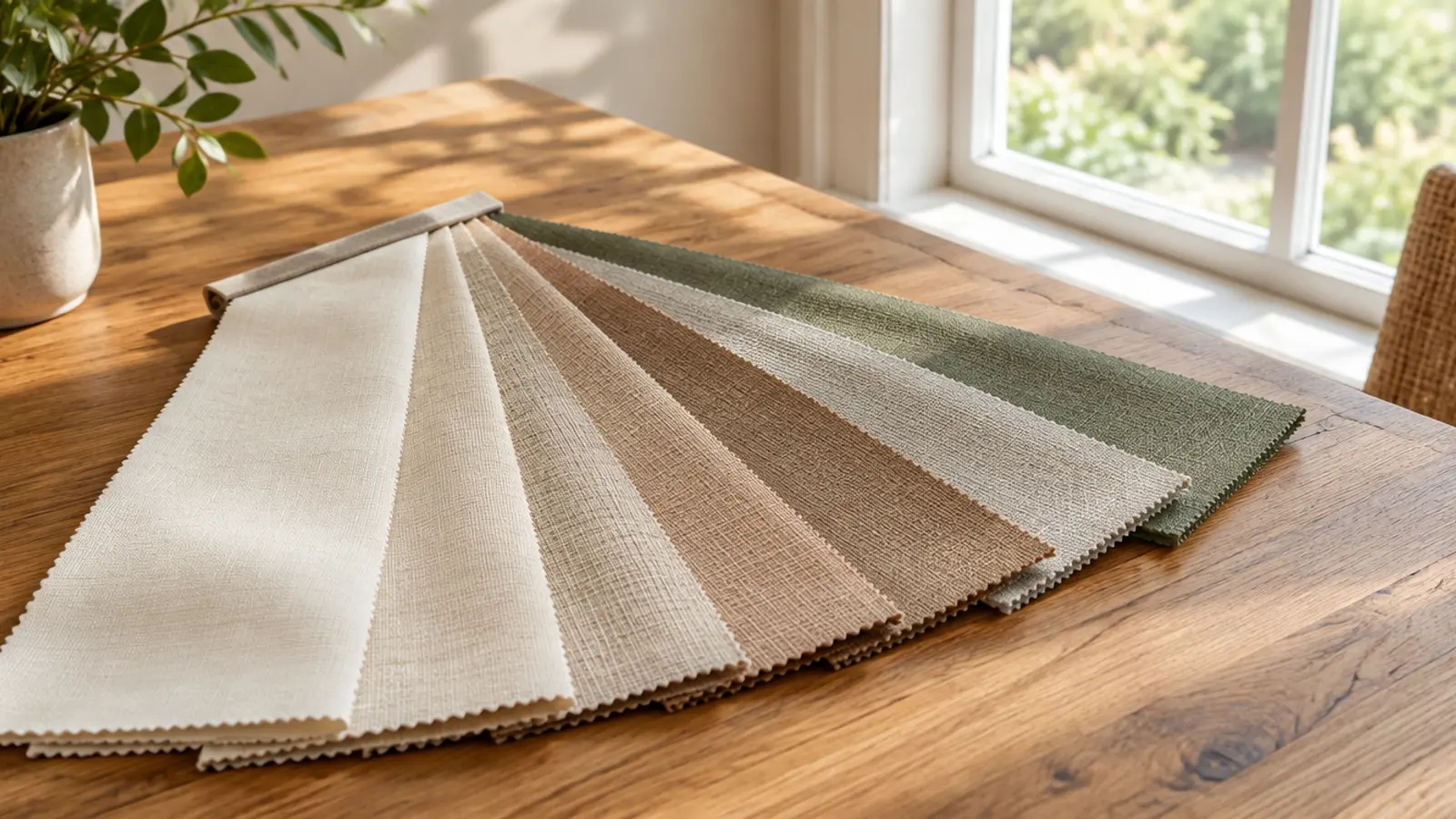
The rest of the drapes we make are drapery panels , and we will bring samples of whichever ones suit the room.
Before you book
Questions about sheer curtains
Anything not answered here gets answered at the appointment, and it costs nothing to ask.
Will sheers give me any privacy?
During the day, a little, and the tighter the weave the more. At night with the lights on, none at all. If privacy is what you are solving, the sheer is the wrong layer and you need a shade or a lined panel behind it.
Do they stop any heat?
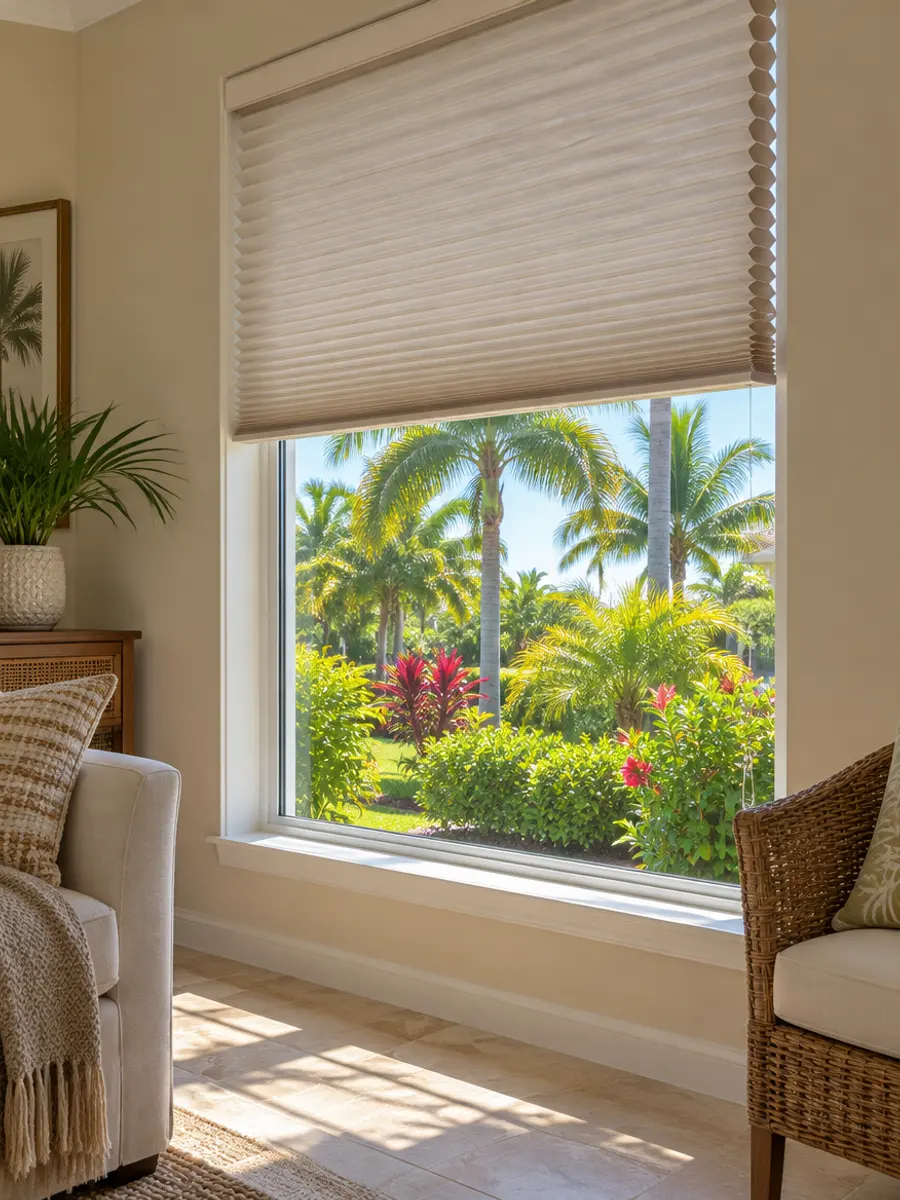
Very little. A sheer softens light; it does not block the energy in it. For heat, a solar shade or a cellular shade behind the sheers is what actually does the work.
How often do they need washing?
Sheers show dust sooner than heavy fabric because light comes through them. Many unlined sheers can be washed cold and rehung slightly damp so the weight pulls the creases out. We will tell you whether yours are washable before you buy.
Can sheers go on a sliding door?
Yes, on a traversing rod that runs past the opening so the fabric stacks clear of the door. It is a common fitting here, and it is usually paired with a shade or verticals behind for the evening.
White or cream?
Cream in a room with warm floors or wood, white in a room with cool grays and a lot of tile. Because the fabric is backlit most of the day, the color reads stronger than the sample suggests, which is the sort of thing you can only judge at the actual window.
I'd like to explore my options
Let's make your home feel complete. We will reach out and help you get started.