How drapery panels work
Fabric hangs from a rod on rings, hooks or a sewn header, and pulls across.
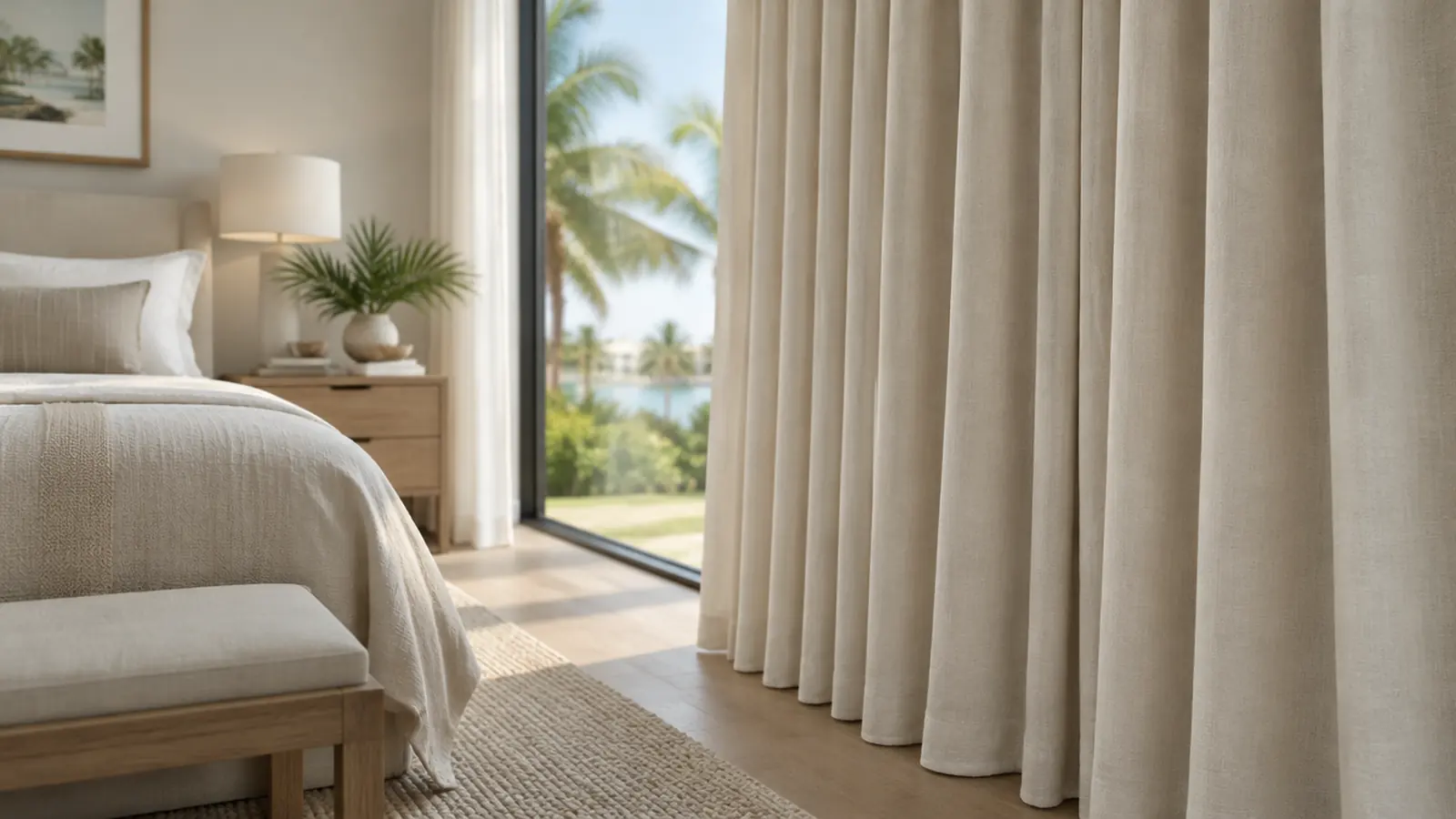
A panel is a length of fabric with a finished top, called the header, that decides how it hangs. A pleated header gathers the fabric into regular folds that stay in place whether the panel is open or closed. A rod pocket slides straight onto the rod and gathers softly. Rings and hooks sit in between and let the panel travel more easily.
The fabric is made to your measurements, which is where the difference between custom and a packet off a shelf actually lives. A ready-made panel comes in a handful of lengths and your ceiling is not one of them, so it either puddles on the floor or stops short above it. A made panel breaks at the floor because that is the number we measured.
Where drapery panels do best in a South Florida home
Bedrooms that must go dark, and rooms that feel unfinished.
A bedroom is the practical case. No blind and no inside mounted shade closes tightly enough at the edges to make a room properly dark, because light finds the gap between the fabric and the frame. A blackout lined panel covers the frame and the wall either side of it, which is the only reliable way to close that gap.
The other case is a room that has everything it needs and still looks bare. Hard surfaces are the norm here, tile floors and plaster walls, and a room of them echoes and looks unfinished.
Fabric at the window is the fastest thing that fixes it. Panels also make a standard window look much taller when the rod is hung close to the ceiling, which is worth knowing in a house with eight foot ceilings and small openings.
What you choose
The fabric, the lining, the header, and where the rod goes.
Fabric decides the look and most of the price. Lining decides the behavior: unlined is light and casual and shows the weave, a standard lining gives body and protects the face fabric from the sun, and a blackout lining is what takes the room dark.
In Florida the lining is also the thing standing between your fabric and years of direct sun, so it is rarely the place to save money.
The header sets how formal the panel reads, from a tailored pleat down to a soft gathered top.
The last choice is where the rod goes, and it changes the room more than any of the others: close to the ceiling rather than just above the frame, and running well past the window on both sides so the panels stack clear of the glass instead of covering it all day.
Motorized drapery panels
The rod carries a motor that pulls the panels across, run from a remote, a switch or a schedule. It earns its place on a very wide run and on a window behind a sofa, where reaching the leading edge means climbing over the furniture. See how motorization works.
Pairings
What people pair them with
Very few windows end up with one thing on them, and the combinations below are the ones that come up most.
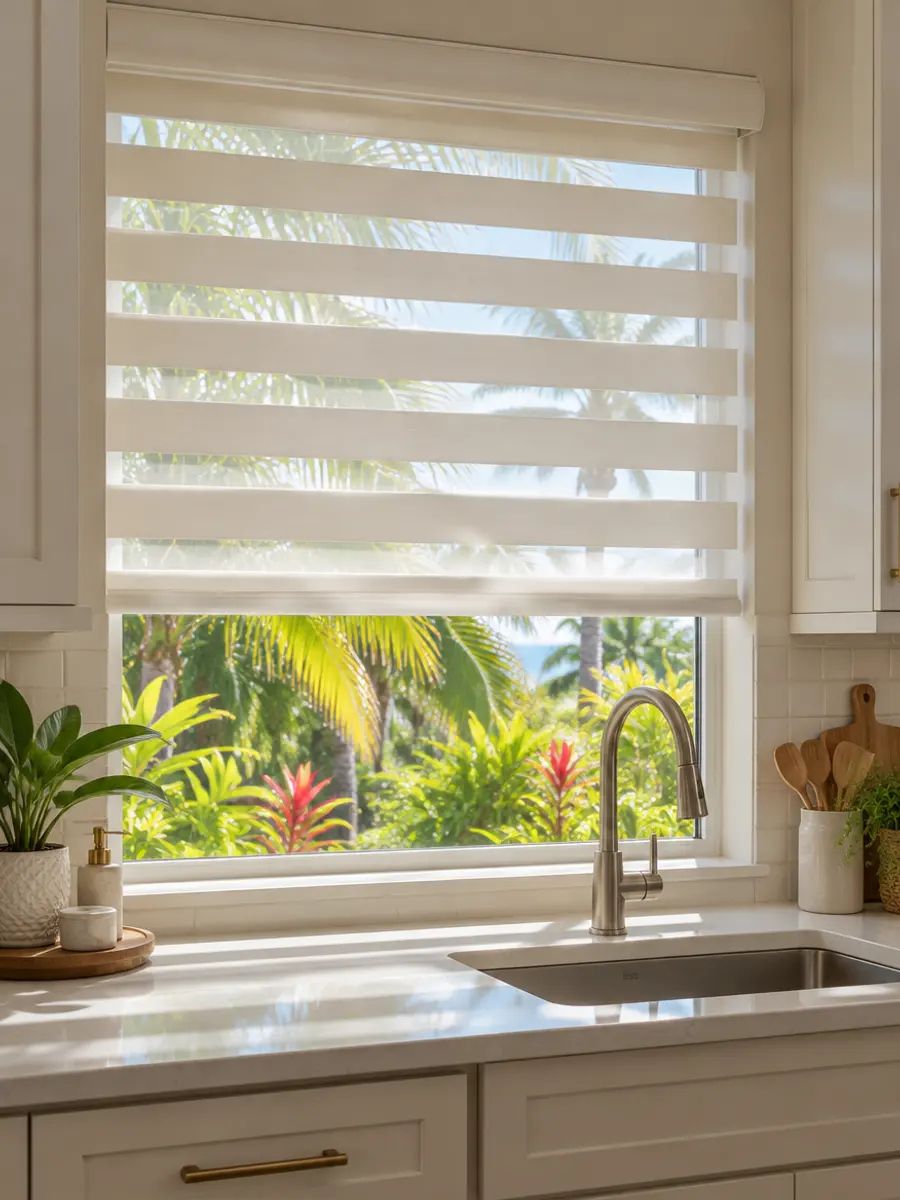
Panels and a shade on the same window is the most common thing we fit, and it is not a luxury: you use the shade through the day and the panels at night, for darkness and for the way the room feels. A roller shade or a zebra shade sits behind them without crowding the opening.
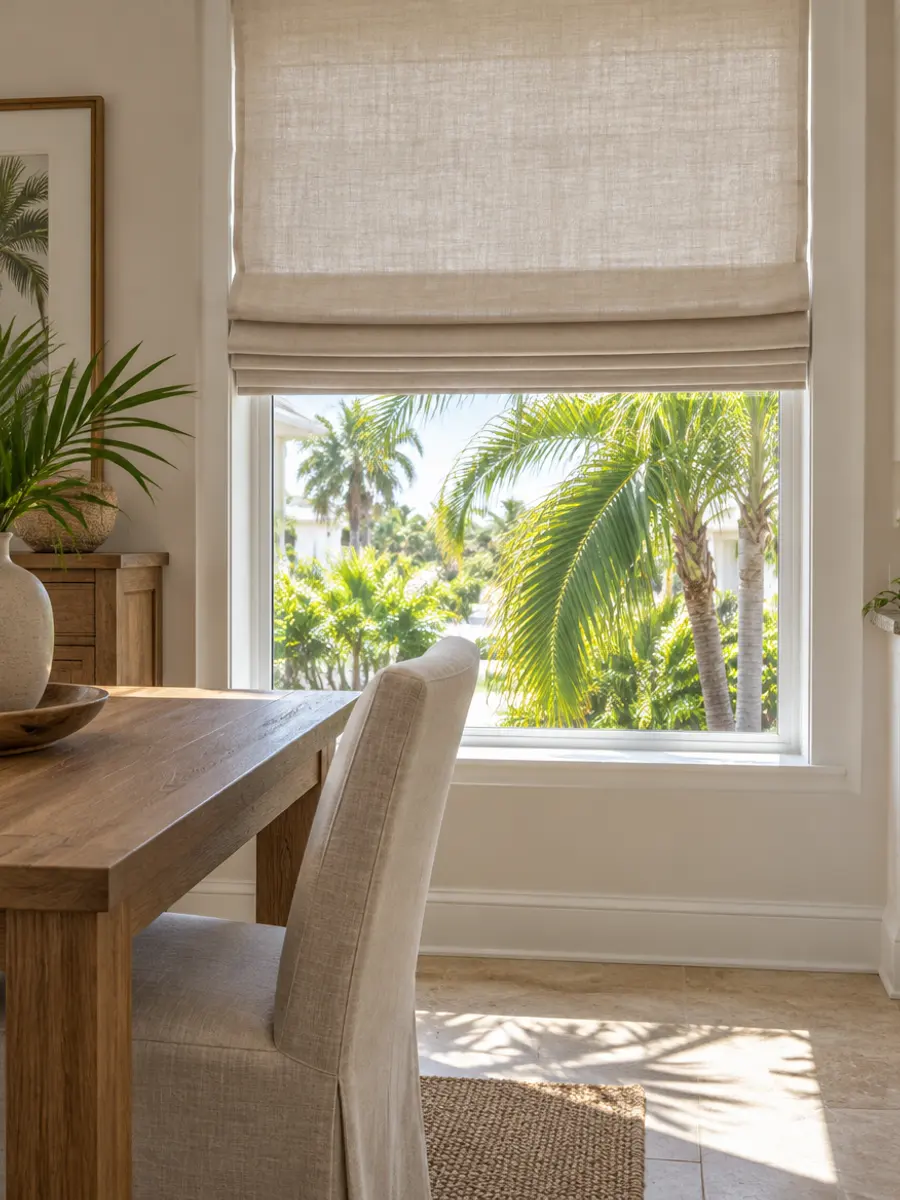
Sheer curtains are the other half of the pair. Hung together, the sheers stay closed through the day and soften the light, and the panels come across in the evening. Where there is no wall either side for panels to stack onto, a roman shade gives the same fabric softness inside the opening instead.
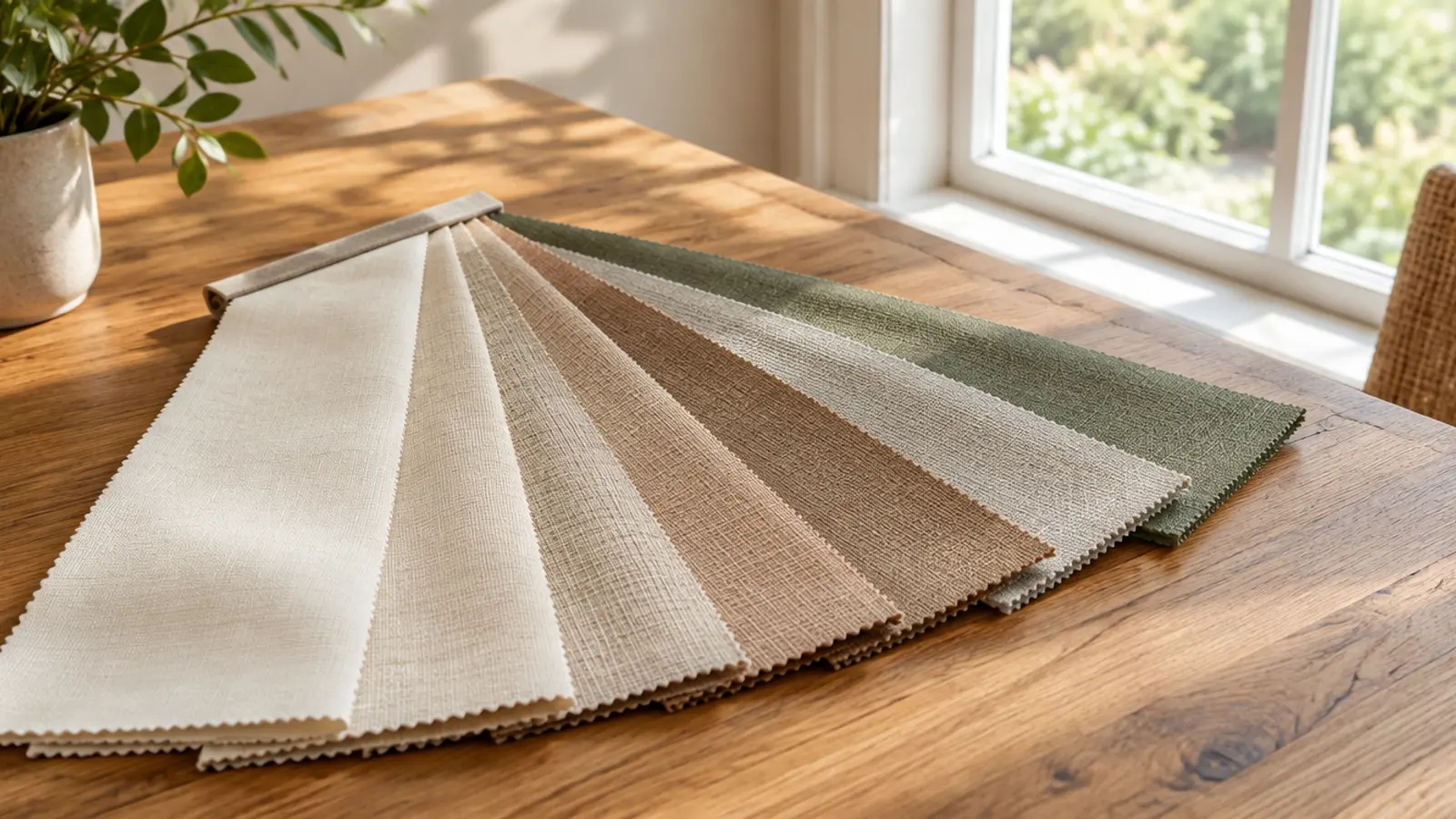
The rest of the drapes we make are sheer curtains , and we will bring samples of whichever ones suit the room.
Before you book
Questions about drapery panels
Anything not answered here gets answered at the appointment, and it costs nothing to ask.
How much fabric does a panel need to look right?
More than the width of the window. A panel that is only as wide as the opening hangs flat and looks skimpy when closed. The usual target is two to two and a half times the width across the pair, which is what gives the fabric folds to fall into. We work it out from your measurements.
Should they touch the floor?
Breaking at the floor, just barely, is the usual choice and it is what looks tailored. Stopping half an inch above it is the practical choice where a door swings past or a vacuum has to get under. Pooling fabric on the floor looks dramatic and collects everything, so we rarely suggest it here.
Can I wash them?
Most lined panels are dry clean only, because the lining and the face fabric shrink at different rates in water and the panel comes back puckered and uneven. We will tell you which yours are before you buy, since it is a reasonable thing to factor in.
Do I need a blackout lining if I already have a blackout shade?
If the room has to be genuinely dark, usually yes, because the shade leaves a line of light down the sides and the panel is what covers it. If the shade is outside mounted and overlaps the frame well, you may not.
What is the difference between drapes and curtains?
In practice, nothing consistent. People generally say drapes for heavier lined panels and curtains for lighter unlined ones, but the words are used interchangeably and no manufacturer agrees on a line. Describe what you want the window to do and the word sorts itself out.
I'd like to explore my options
Let's make your home feel complete. We will reach out and help you get started.