How outdoor drapes work
Weather-made fabric panels hang from a track or a rod and pull across by hand.
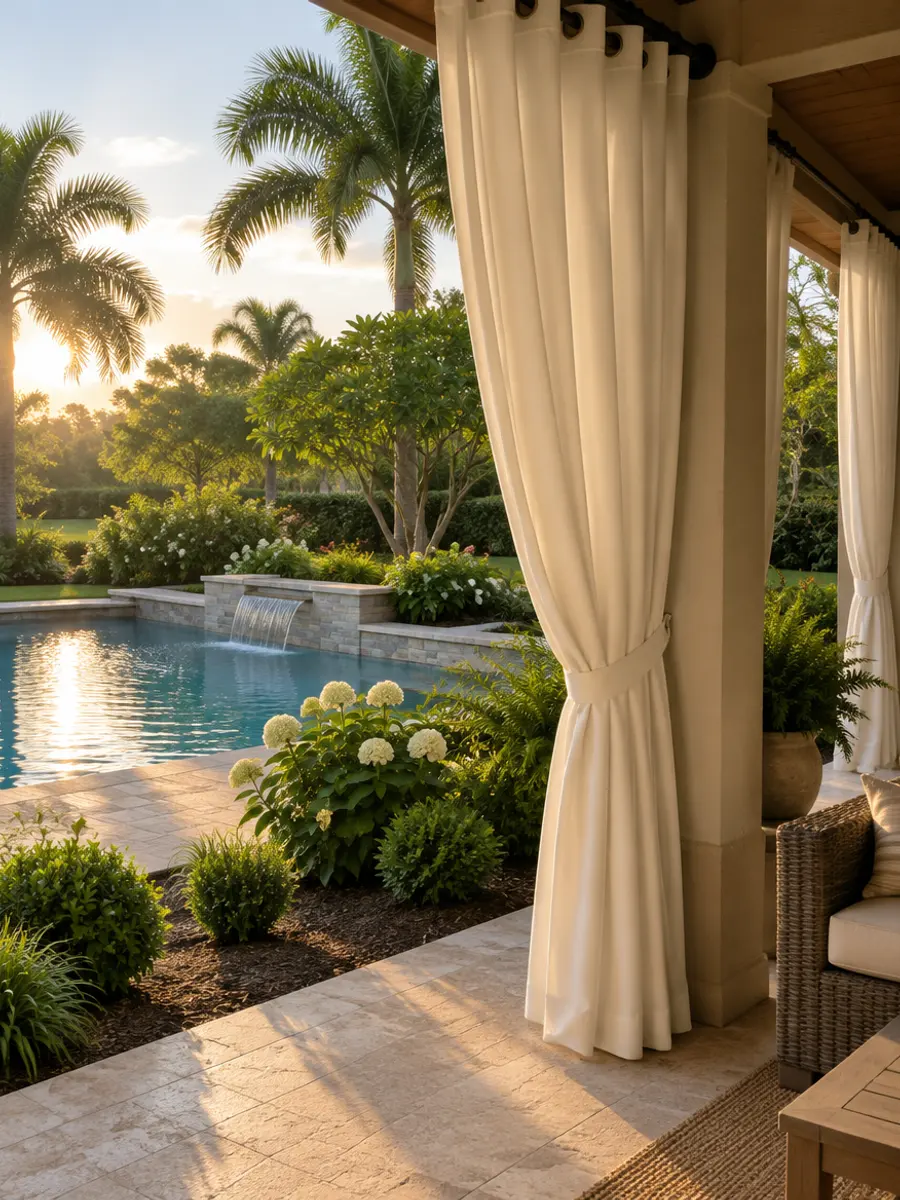
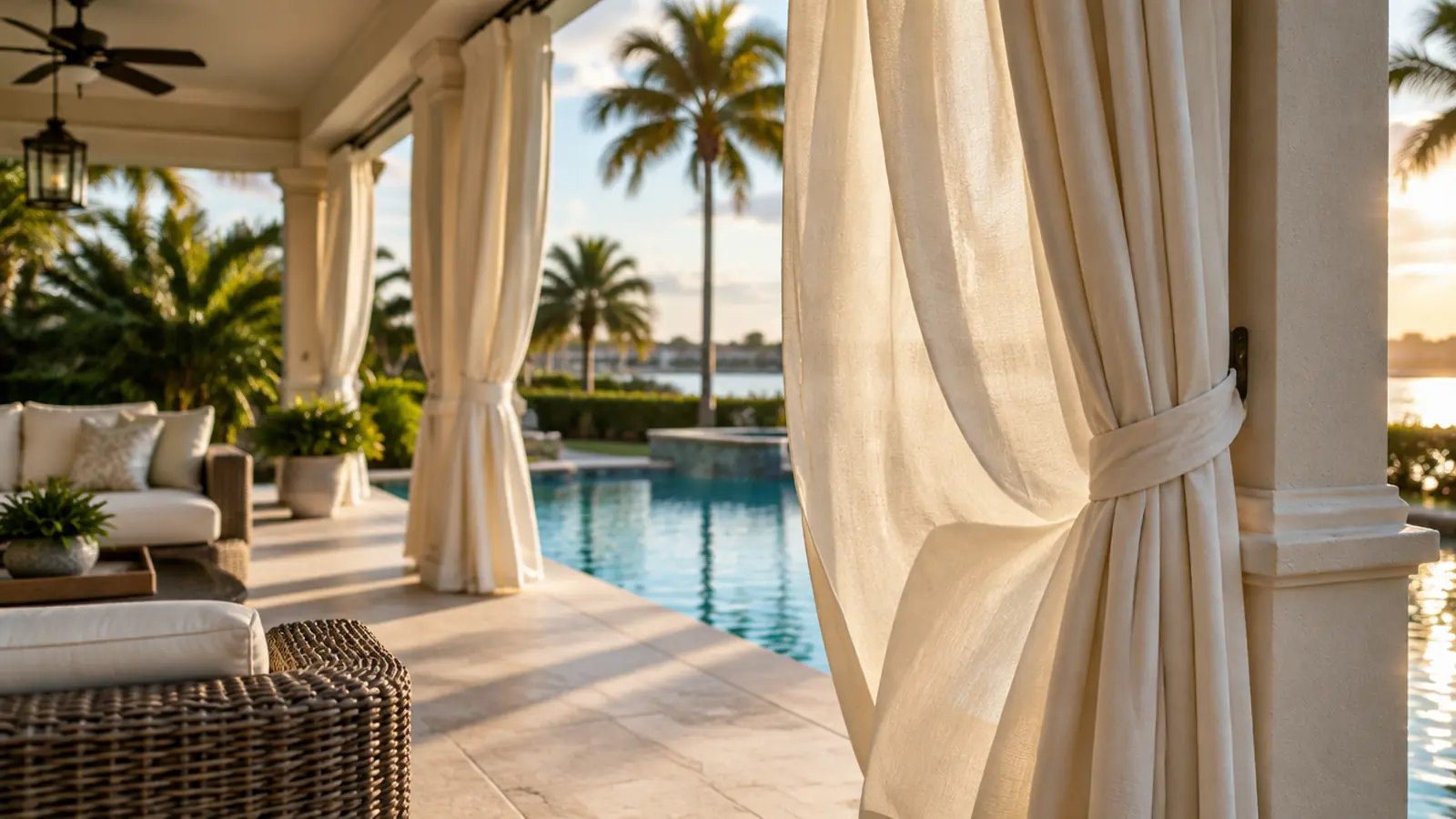
Outdoor drapes are panels of fabric built for sun and rain, hung at the edge of a covered space on a track or a heavy rod. They pull across to shade and screen the space, and they sweep back in one motion when you want it open again.
They are made differently from indoor panels, and not only in the fabric. The hems are weighted or reinforced so a breeze does not take them, the sewing thread is chosen so it does not rot in sunlight before the fabric does, and the hardware is specified for weather. An indoor curtain hung outside here fails within a season.
Where outdoor drapes do best in a South Florida home
Where the problem is one neighbor rather than the sun.
A lanai that looks straight at the house next door is the clearest case. A full shade across the open side would deal with it and would also take away the rest of the view and the breeze. A pair of drapes closes the side that needs closing and leaves everything else alone.
They also suit a pergola, a cabana and a balcony where the look matters as much as the function, because soft fabric makes the space look like a furnished room rather than a covered slab. People often hang them for evenings, when the sun is not the issue at all and the point is to make an open space feel like somewhere to sit.
What you choose
The fabric weight, how they are hung, and how they are held when the wind picks up.
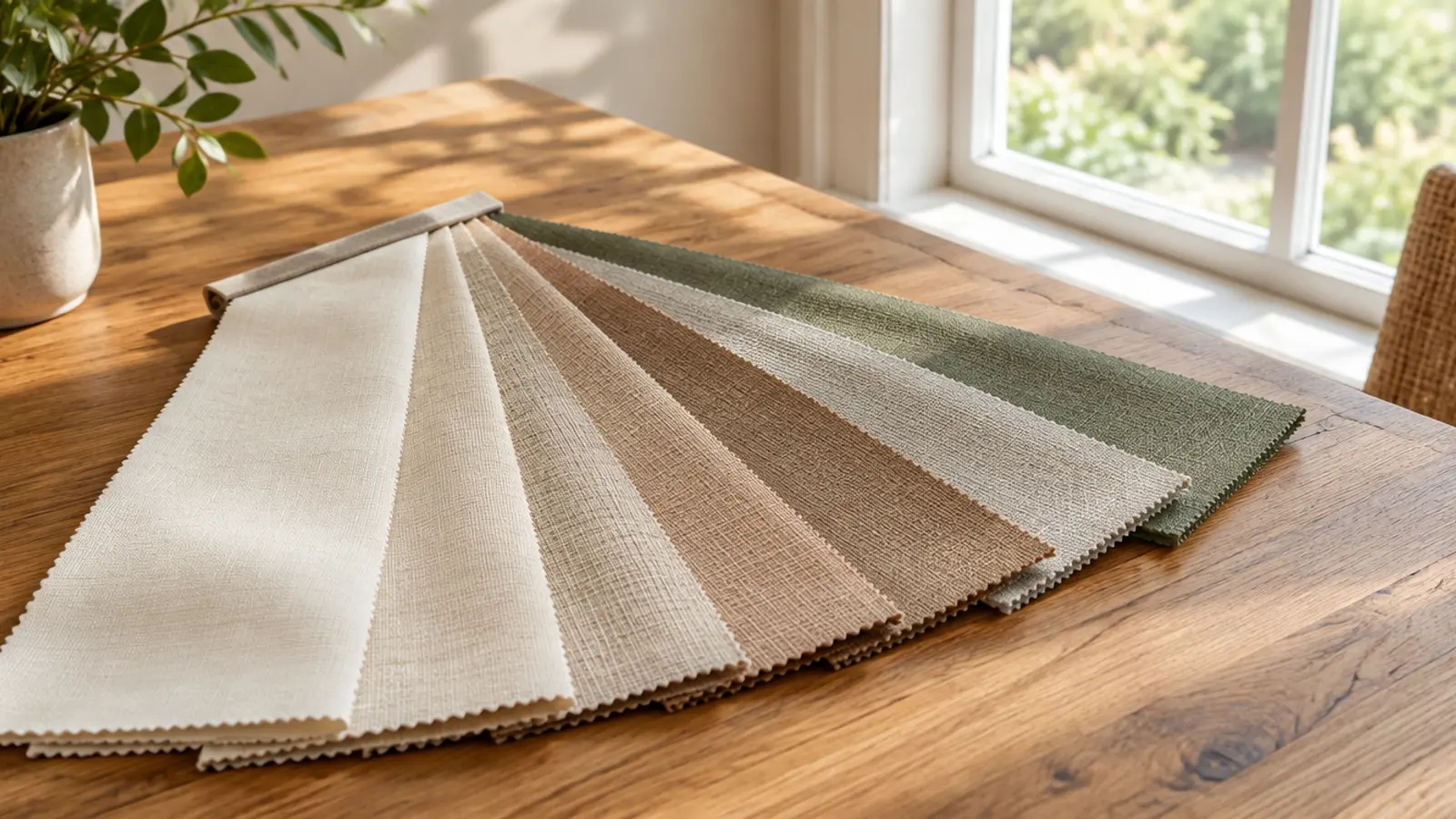
Fabric comes in weights from a light outdoor sheer that moves in the air to a solid canvas that genuinely shades. Light fabric looks better and does less; heavy fabric shades properly and is more to handle.
Color holds up well in all of them because the pigment is in the fiber rather than printed on it, which is what separates outdoor fabric from indoor fabric that happens to be tough.
Hanging is a track, which moves easily and takes a heavy panel, or a rod, which looks more like an indoor room. The last detail is the one people forget: tiebacks, or weighted hems, or both, so that when the wind comes up the panels are held rather than wrapping themselves around the furniture.
Motorized outdoor drapes
A motorized track pulls the panels across on a long run, which is worth having where the track is longer than a comfortable reach. Most outdoor drapes stay manual, because sweeping them aside by hand is part of what makes them feel like drapes. See how motorization works.
Pairings
What people pair them with
Very few windows end up with one thing on them, and the combinations below are the ones that come up most.
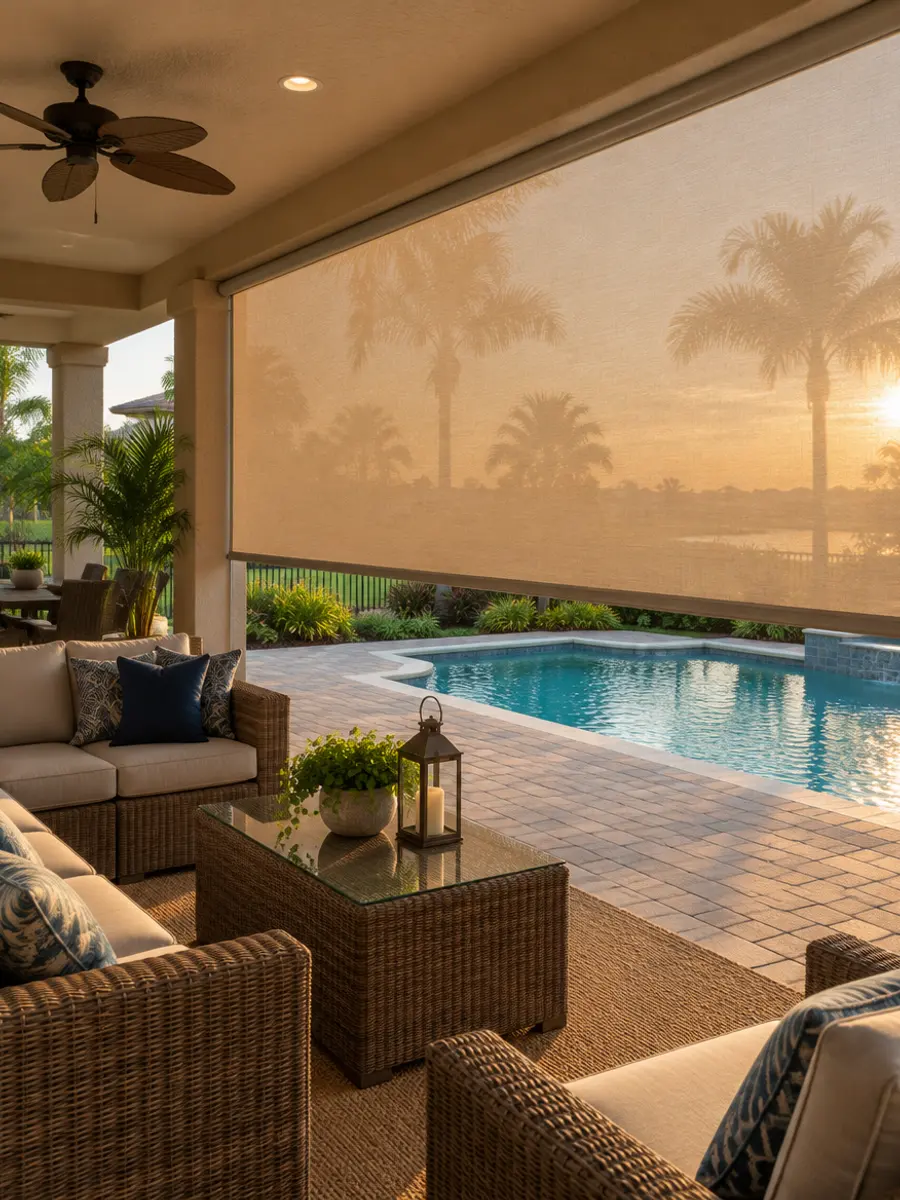
Outdoor shades are the alternative, and they stop considerably more heat and wind because they cover the whole opening and roll away flat. Plenty of patios use both: a shade on the west side where the sun arrives, and drapes on the side facing the neighbor.
Indoors, drapery panels on the room behind the patio carry the same fabric idea through the glass, which makes the two spaces read as one rather than as a house and a yard.
Plan the hardware height before anything else. A track fixed to the underside of a beam gives a clean line and keeps the panel out of the walkway, while a rod on the posts is easier to fit and puts fabric where people brush past it. Both work, and they look quite different.
Cleaning is a hose and a soft brush, and they are better washed in place than taken down. Most outdoor fabric is made to be rinsed, and the thing to avoid is a pressure washer, which drives water through the weave and can lift the finish that keeps the color stable.
Hardware height is the other early decision. A track fixed under a beam gives a clean line and keeps the fabric out of the walkway. A rod on the posts is simpler to fit and puts the panel where people brush past it. Both work, and they look quite different.
The rest of the outdoor we make are outdoor shades , and we will bring samples of whichever ones suit the room.
Before you book
Questions about outdoor drapes
Anything not answered here gets answered at the appointment, and it costs nothing to ask.
Will they get mildew?
Proper outdoor fabric is made to resist it, and the pigment is in the fiber so it does not feed growth the way an untreated indoor fabric would. They still need air. A panel left bunched and wet in a shaded corner for weeks will eventually show something, so let them dry out spread rather than gathered.
Do I have to take them down in summer?
No, they are made to stay out. They should be tied back or taken in before a storm, and that is about wind rather than rain. If the house is empty for months, bringing them in is a reasonable precaution rather than a requirement.
Do they give privacy?
Yes, in the direction they are drawn, which is the main reason people choose them over a shade. They are not a wall, and a light fabric with a light behind it will show shapes at night, same as any curtain.
Will they stop the heat?
Some of it, in the area behind them. An outdoor shade across the open side does considerably more, because it covers everything and sits tight in side channels. If heat is the whole complaint, the shade is the right product.
What holds them in the wind?
Weighted hems, tiebacks, and in some cases a cable run through the hem. We specify it for the position: a ground floor lanai between two walls needs much less than a sixth floor balcony, and that is judged on site rather than from a plan.
I'd like to explore my options
Let's make your home feel complete. We will reach out and help you get started.