How real wood blinds work
The same mechanism as faux wood, in a slat that weighs about half as much.
Slats on cords, a wand to tilt them, a cord or a wand to lift the set. Mechanically there is nothing to learn that a faux wood blind would not teach you. What changes is the material, and the material changes two things: how the blind looks and how much it weighs.
Wood is light. On a window wide enough that a faux wood set is a two-handed lift, a real wood set of the same size is still easy, and it can often stay as one blind where faux wood would have to be split into two. That is the practical reason to pay more, and it is separate from the look.
Where real wood does best in a South Florida home
The dry rooms. Keep it away from steam and away from a kitchen sink.
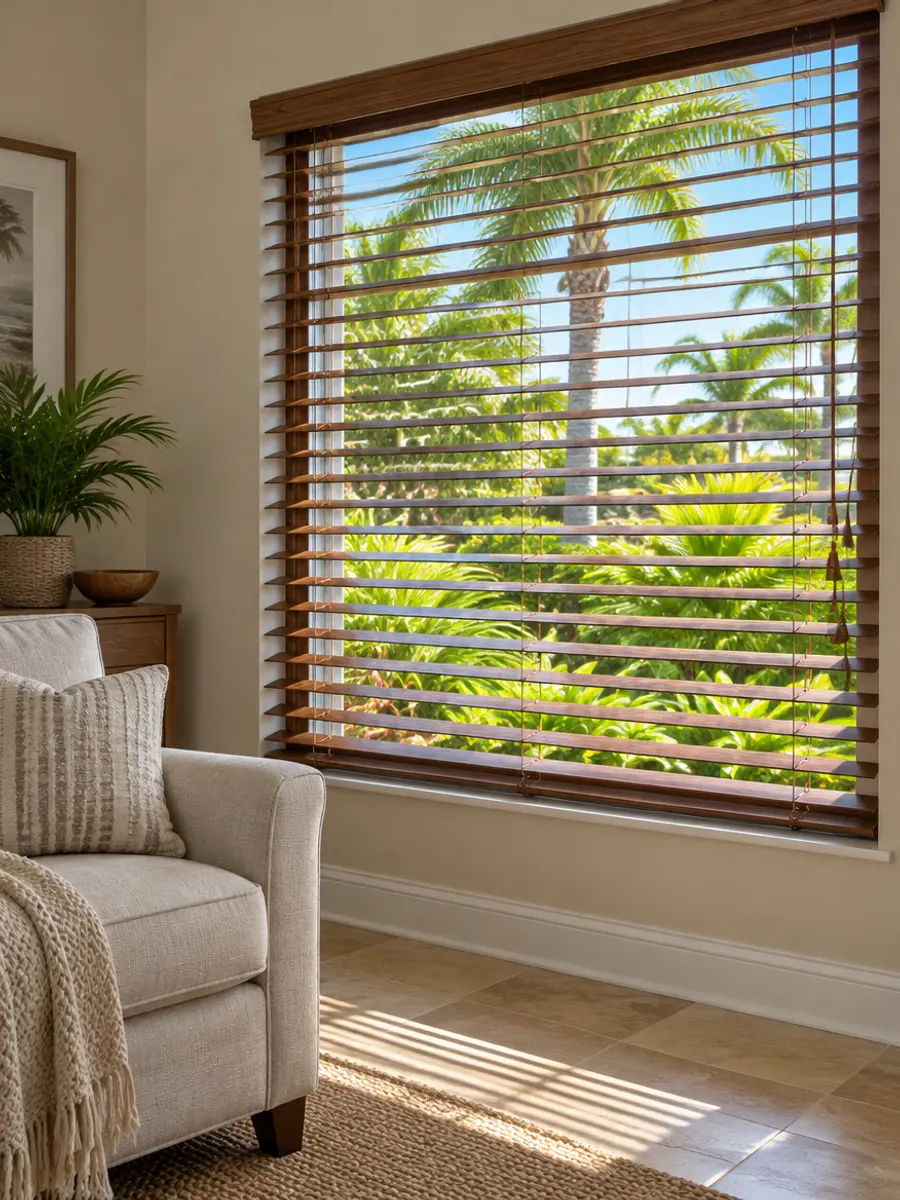
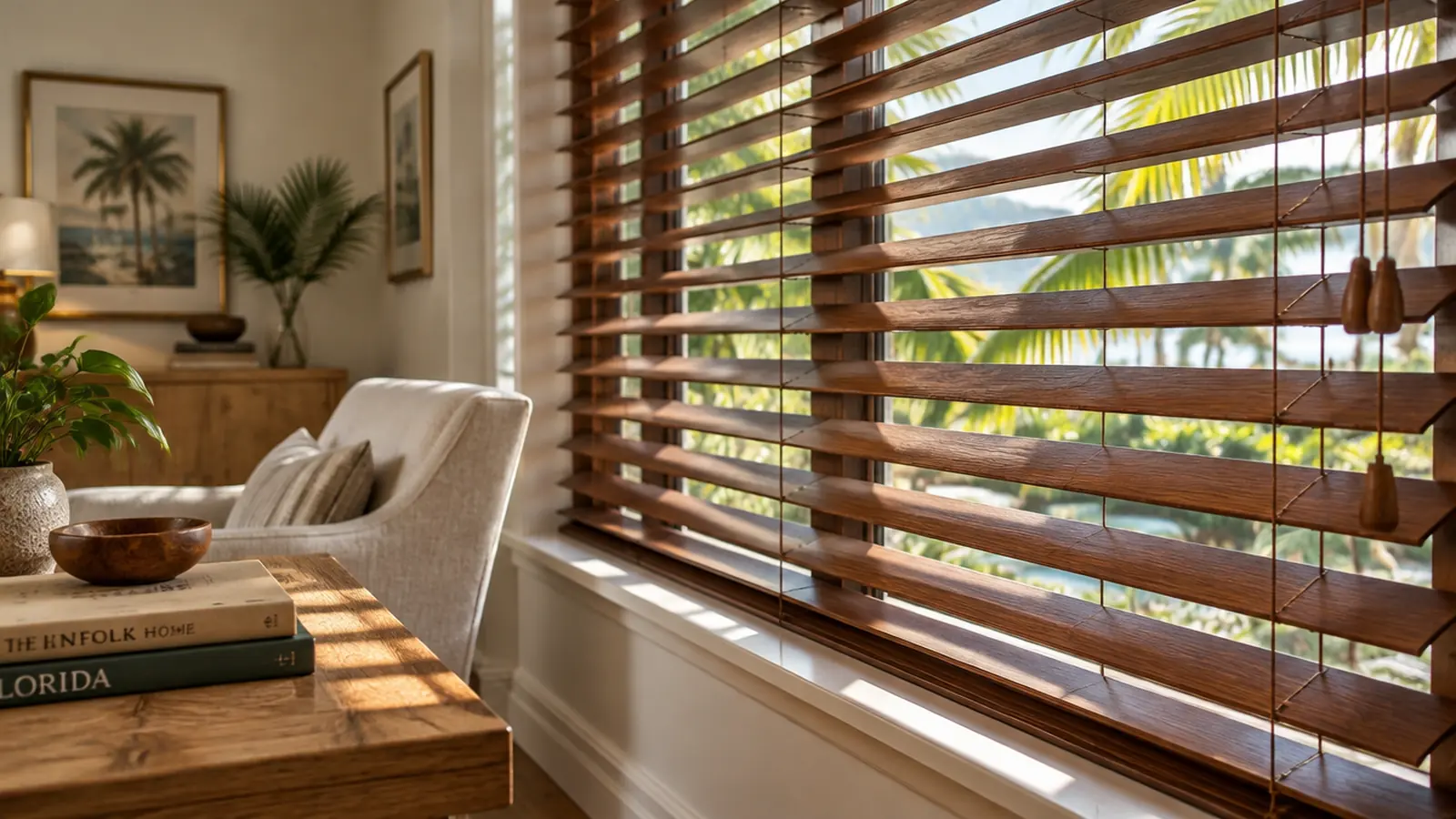
A living room, a bedroom, a dining room or an office is where wood belongs. In those rooms the grain is visible, stains go warm and deep in a way a printed finish does not, and the blind looks like furniture. On a wide front window the lighter weight is the difference between a blind you open and one you leave down.
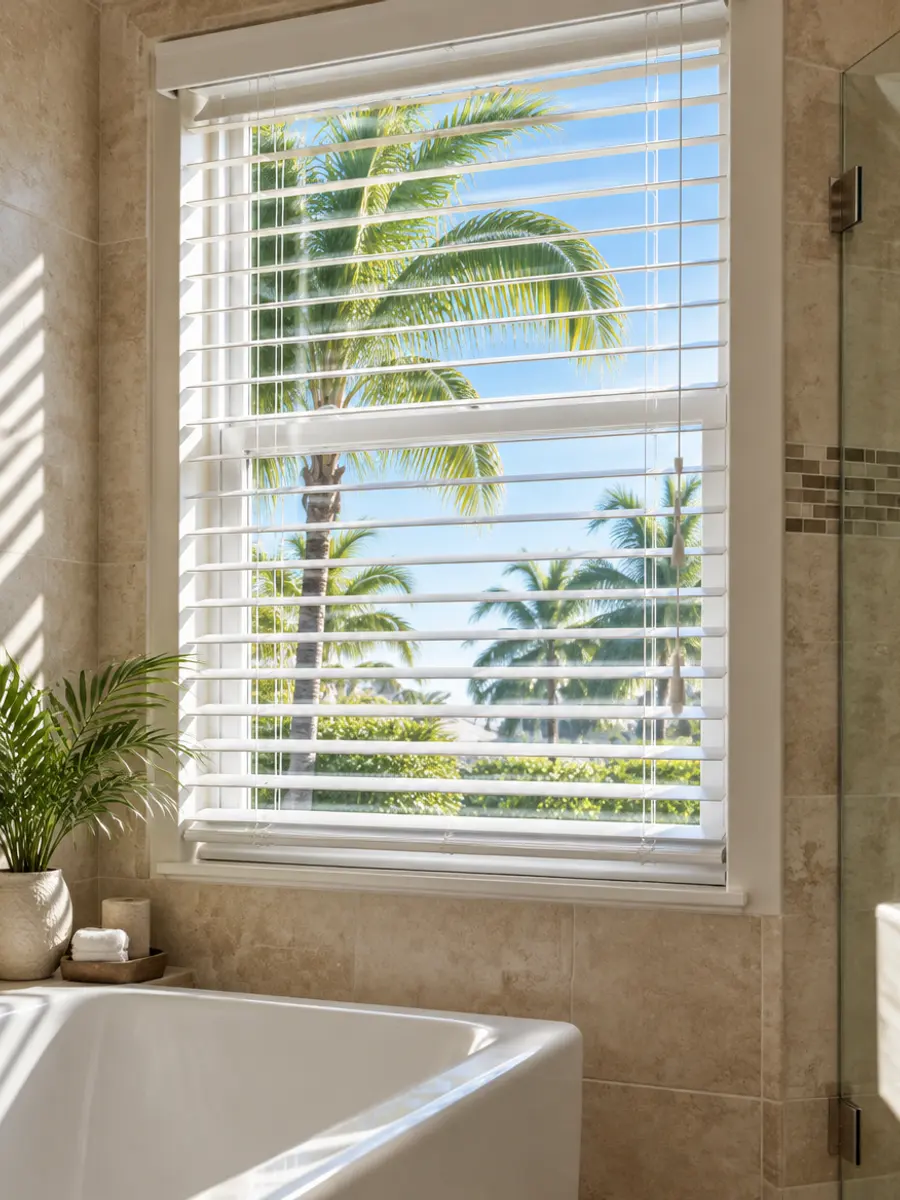
The rooms to avoid are the damp ones. A wood slat in a bathroom takes on moisture from the air, swells along one edge more than the other and bows, and it will not come back.
A window over a kitchen sink does the same thing more slowly. In those rooms faux wood is the answer, and it can be color matched so the house still looks consistent.
What you choose
The finish, the slat width, and whether the ladder cords are hidden by cloth tapes.
Stains show the grain and are the reason most people buy wood. Painted finishes cover it and suit a room where the trim is white and the blind is meant to disappear. Both come in two inch and two and a half inch slats, and the wider slat shows more glass when the blind is open.
The detail that changes the look most is tapes. By default the lift cords run through small holes punched in each slat, and those holes let through pinpricks of light.
Cloth tapes run down the face of the blind instead, hiding the holes behind a band of fabric. They cut that light leak, they add a decorative line, and they are the thing that makes a wood blind look tailored rather than standard.
Motorized real wood blinds
Wood is the easiest blind to motorize well, because the lighter slat asks less of the motor. It is worth it on a tall window or a stair landing, where lifting by hand means standing on something. See how motorization works.
Pairings
What people pair them with
Very few windows end up with one thing on them, and the combinations below are the ones that come up most.
The straight comparison is faux wood blinds, which cost less and survive damp rooms. Most of the houses we fit use real wood in the dry rooms and faux wood in the wet ones, matched in color, which is the sensible way to spend the difference.
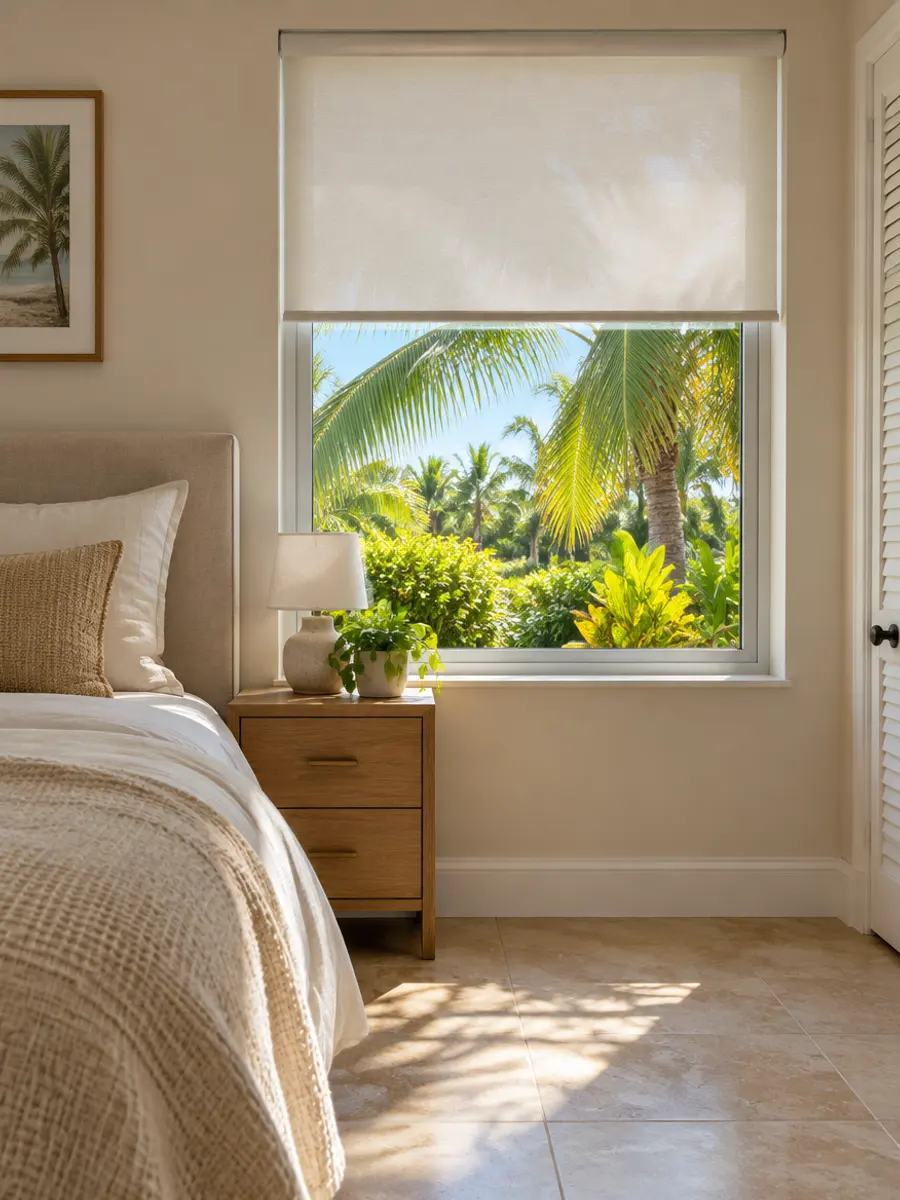
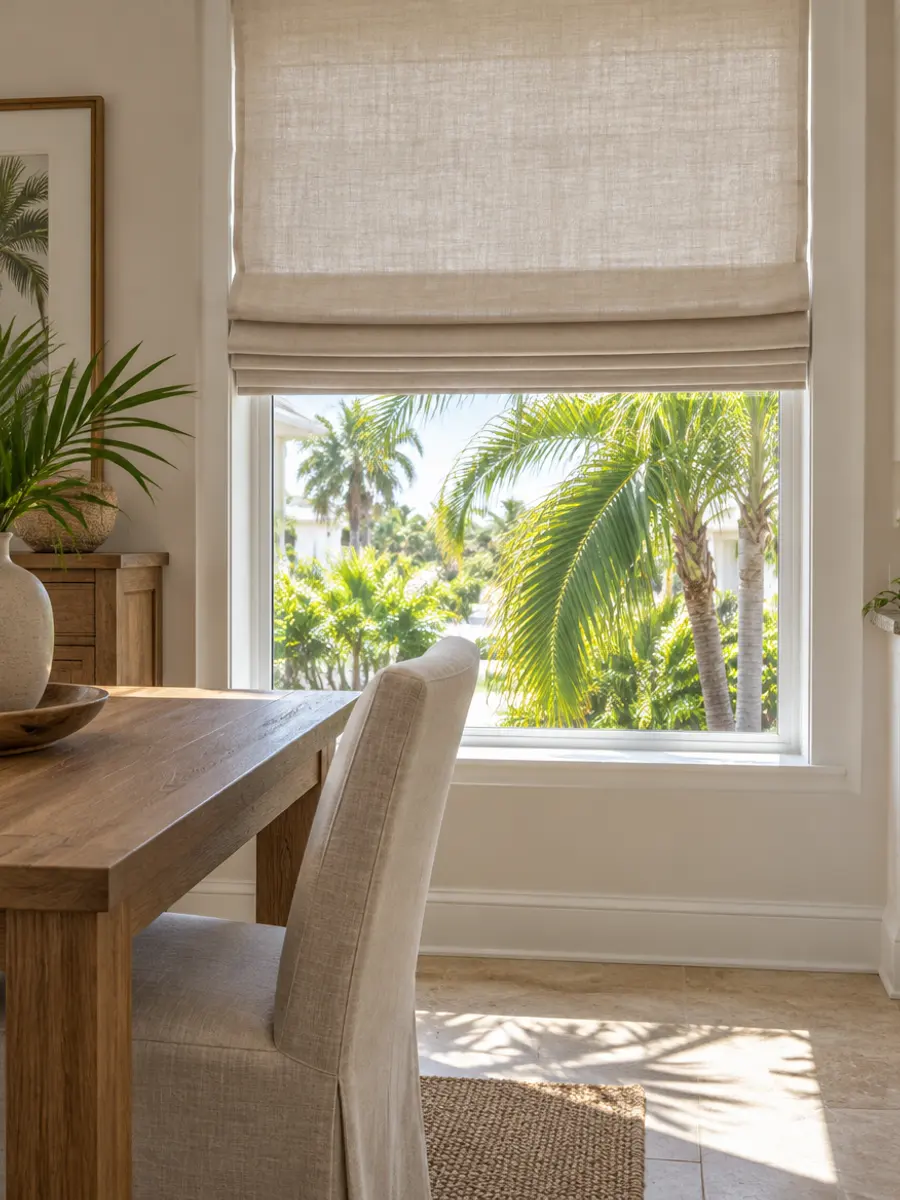
For a bedroom, a wood blind handles the daytime and a blackout lined drapery panel handles sleeping, because no blind closes tightly enough at the slat edges to make a room properly dark. In a dining room, people often choose a roman shade instead, for the softness rather than for the light control.
Where the budget will not stretch to wood across a whole house, the usual compromise is wood in the rooms visitors see and faux wood everywhere else. Matched in color and slat width the two are hard to tell apart from a doorway, and the money goes where somebody actually looks at it.
Wood moves slightly with the seasons even in a dry room, which is normal and not a fault. What it means in practice is that a blind fitted in February can sit a fraction differently in August. A good install leaves room for that rather than wedging the headrail tight.
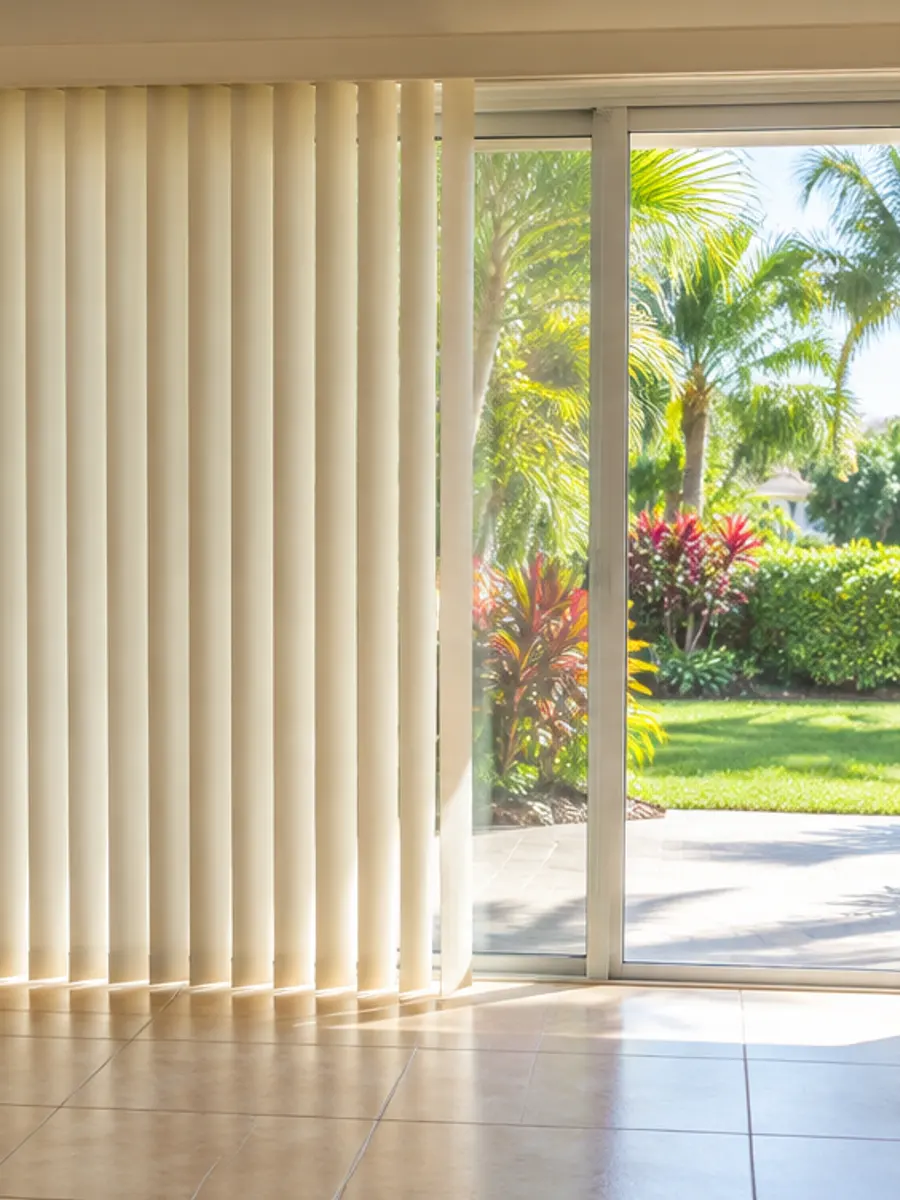
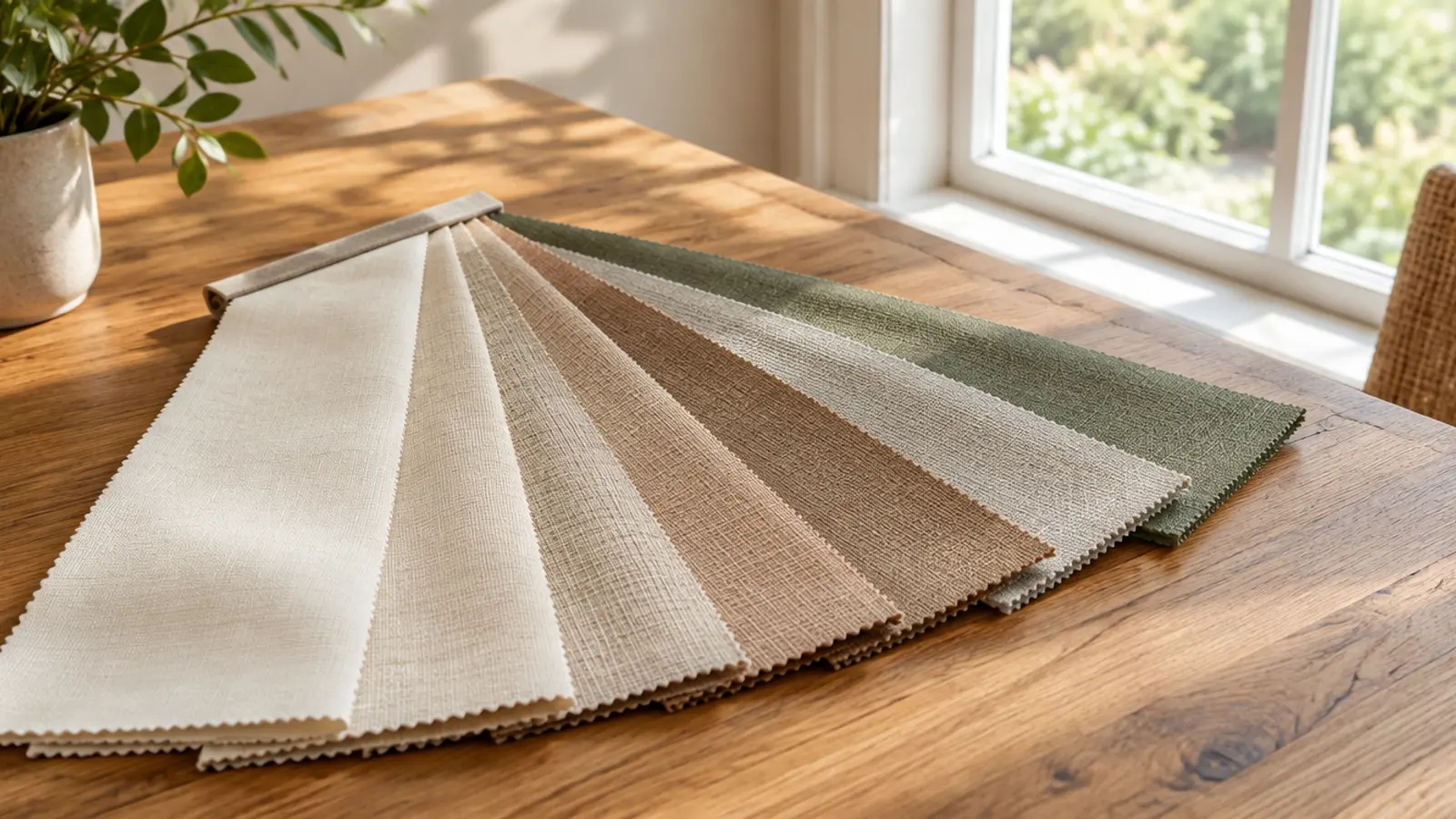
The rest of the blinds we make are faux wood blinds and vertical blinds , and we will bring samples of whichever ones suit the room.
Before you book
Questions about real wood blinds
Anything not answered here gets answered at the appointment, and it costs nothing to ask.
How much more do real wood blinds cost?
More than faux wood, and the gap widens as the window gets bigger, because you are paying for the material. We will price both at the appointment on your actual measurements, which is the only honest way to answer this.
Will they warp in Florida?
In a dry, air-conditioned room, no. In a bathroom or over a kitchen sink, yes, and that is why we will not sell them for those rooms. Humidity reaching a wood slat is a matter of when rather than if, and a bowed slat cannot be fixed.
What wood is it?
Basswood for almost all of it. It is light, it takes a stain evenly and it stays straight, which is why it has been the standard for wood blinds for decades. We will show you the actual samples at the appointment.
Are cloth tapes worth it?
For looks, often yes, and they are the single biggest change you can make to how a wood blind reads. For light, they help at the cord holes but they do not make the blind dark. Judge them on appearance.
Can a wide window stay as one blind?
Usually, and more often than with faux wood, because wood is roughly half the weight. We check the width and the height together at the appointment, since a tall blind is heavier than a short one of the same width.
I'd like to explore my options
Let's make your home feel complete. We will reach out and help you get started.