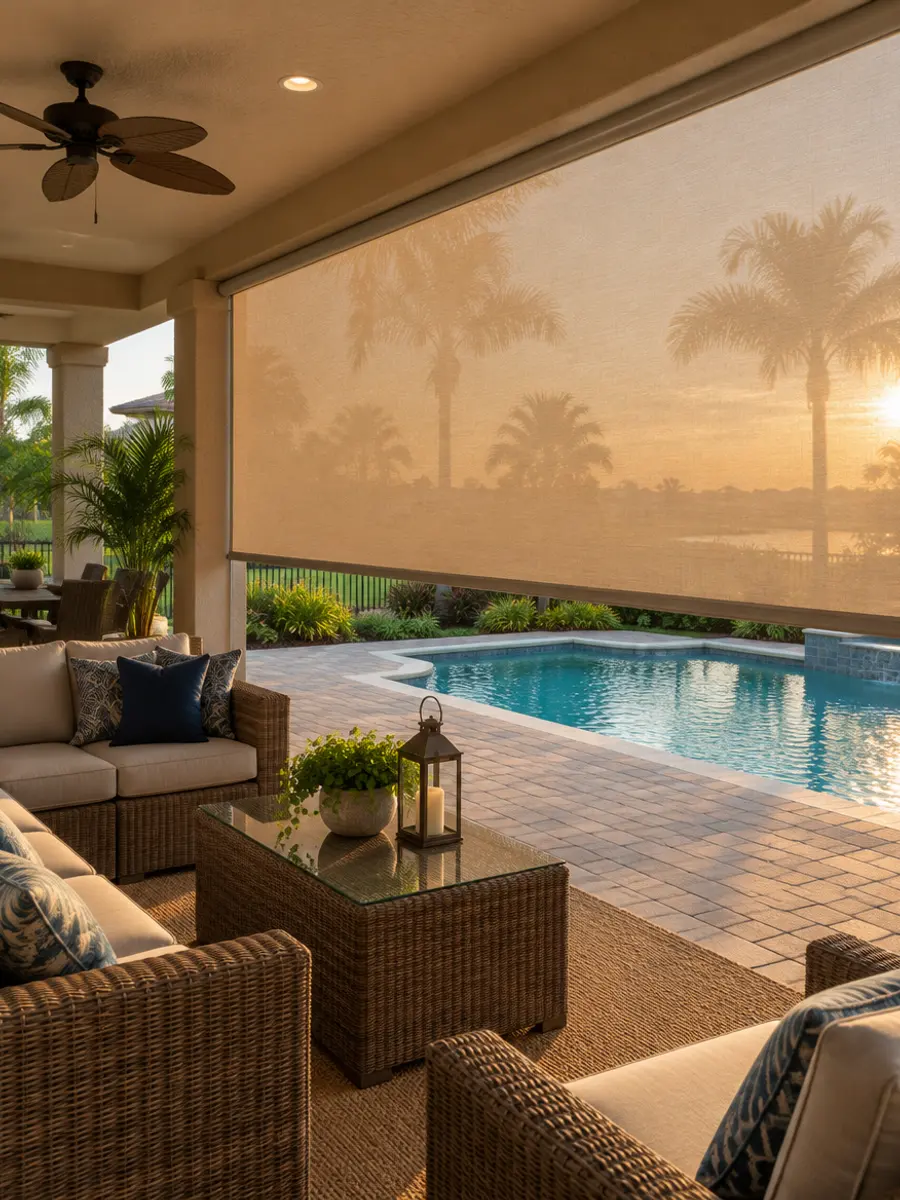
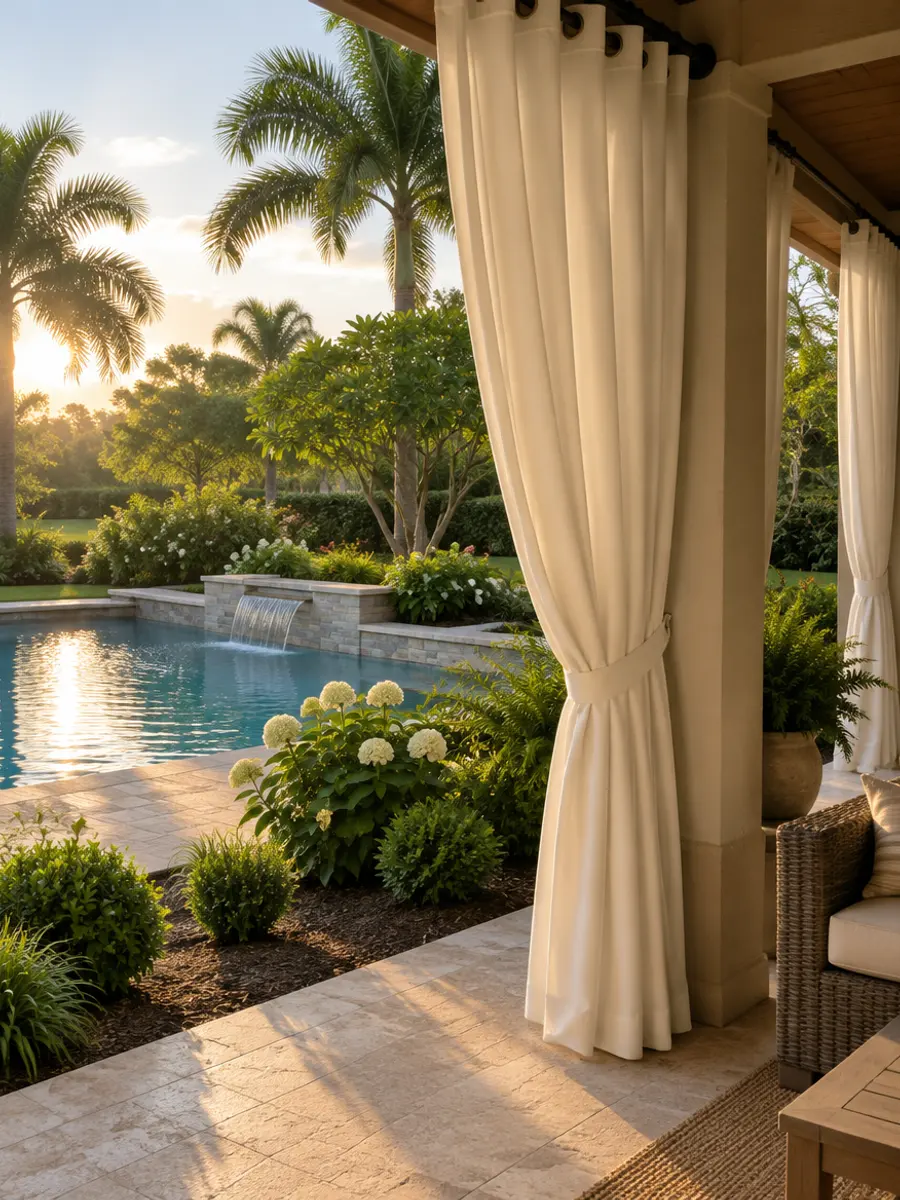
Beachfront glass and salt air
Within a few blocks of the ocean, salt corrodes the hardware long before it damages the fabric.
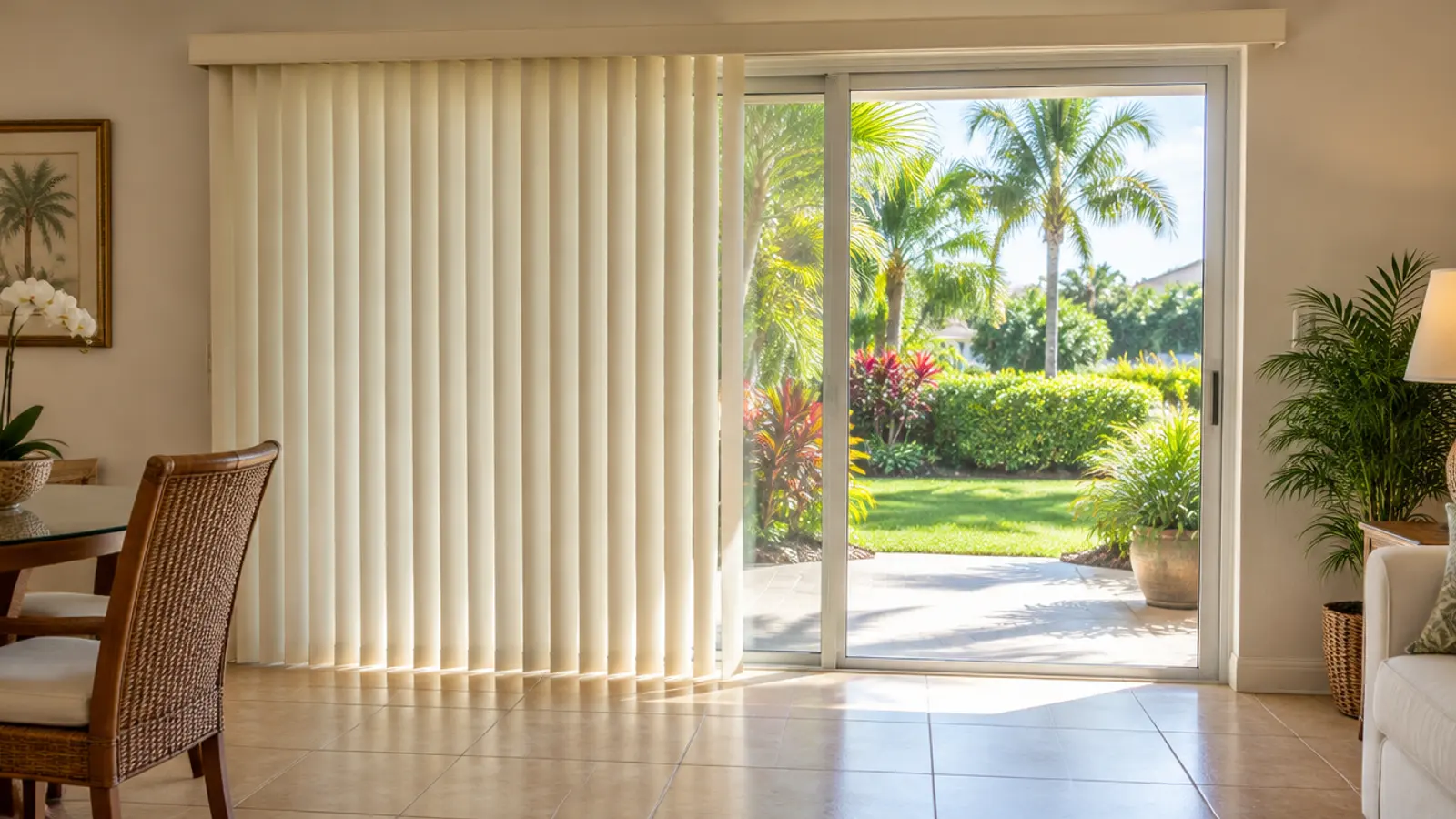
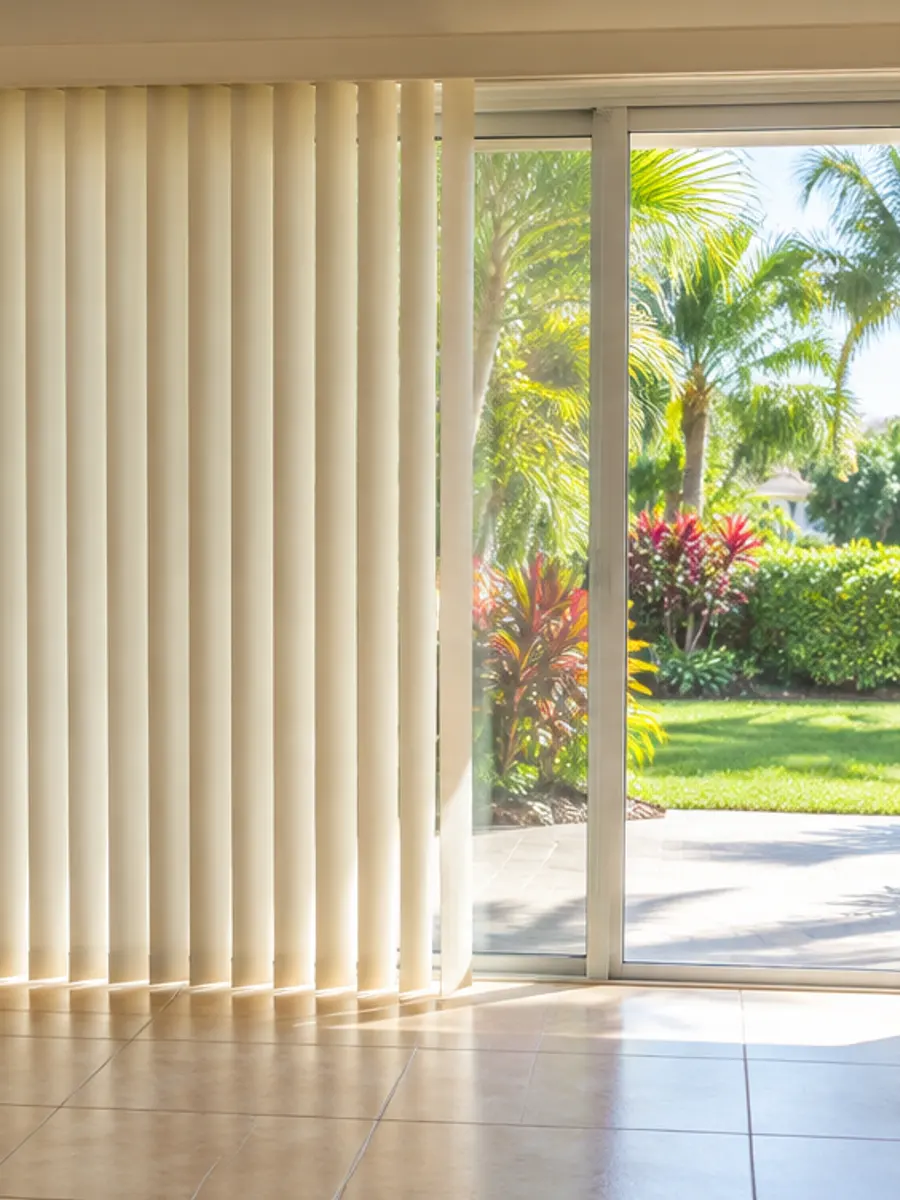
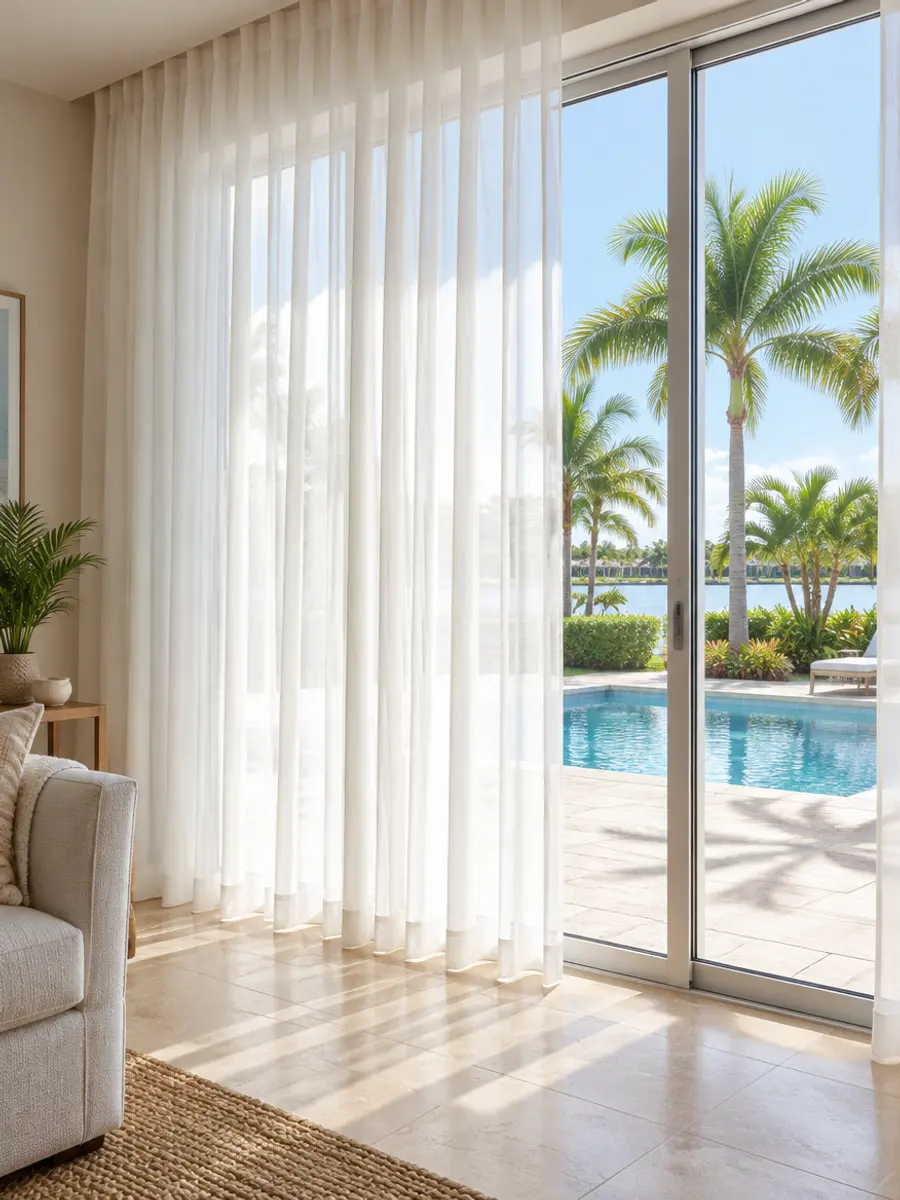
In Fort Lauderdale, Pompano Beach, Lauderdale by the Sea and Hallandale Beach, a sliding door that faces the water gets salt on it every day, whether or not anyone opens it. That is hard on bare metal.
It is the reason we steer oceanfront jobs toward sealed hardware and away from an exposed metal chain, and the reason a cheap outdoor shade on a beachfront balcony often fails in its second season while the fabric still looks new.
West Broward and the afternoon sun
In Weston, Southwest Ranches and the newer parts of Pembroke Pines, the problem is heat, not privacy.
The newer western suburbs were built with large west-facing windows and two-storey great rooms, and nothing outside shades them. From about three in the afternoon the glass takes the sun straight on, and the room gets ahead of the air conditioning.
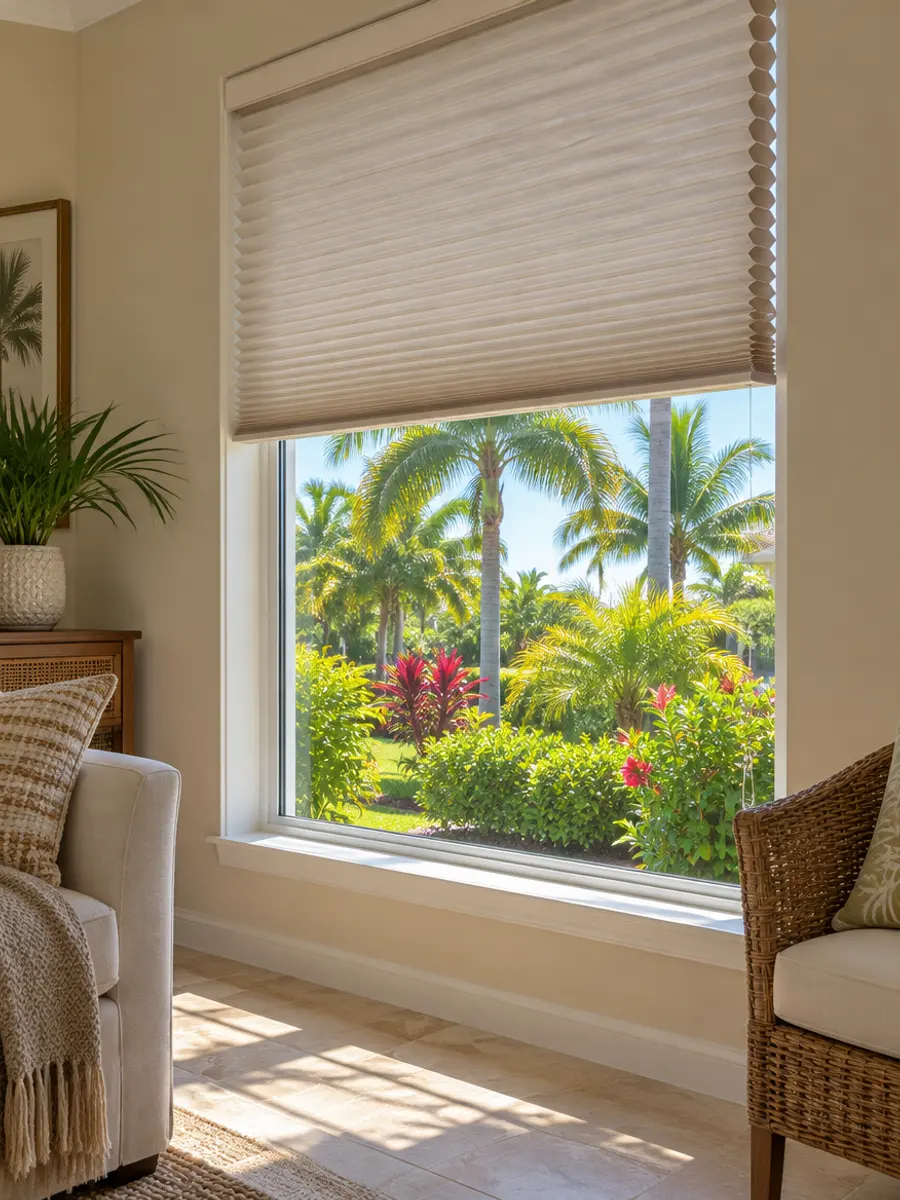
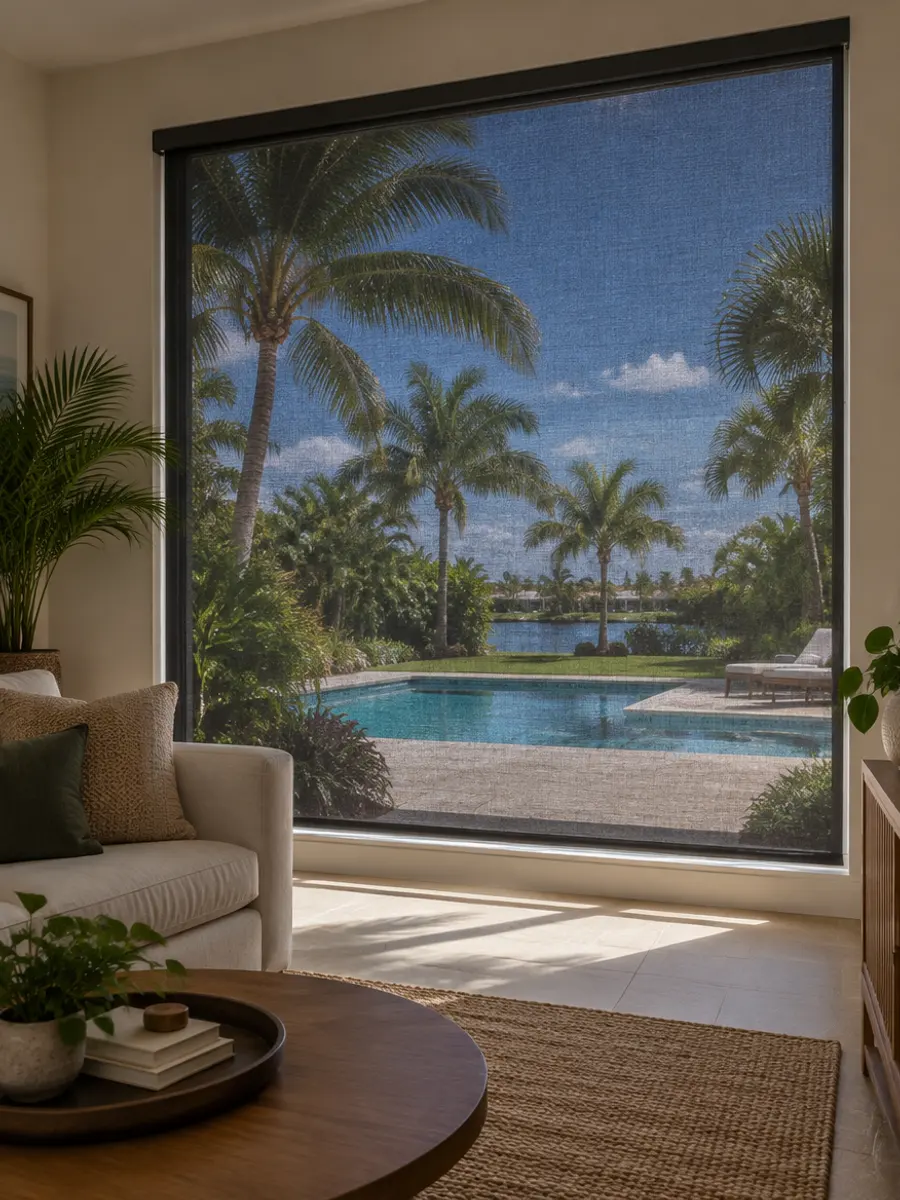
A cellular shade is the one that helps most there, because the air trapped in its pockets slows the heat at the glass. A solar shade is the one to use when the view matters more than the last degree.
Condo rules along the Intracoastal
Many Broward buildings require the side facing out to be white or off-white.
From Hallandale Beach up through Pompano Beach, a large share of the housing is mid-rise and high-rise, and the association usually has a rule about what the building looks like from the street.
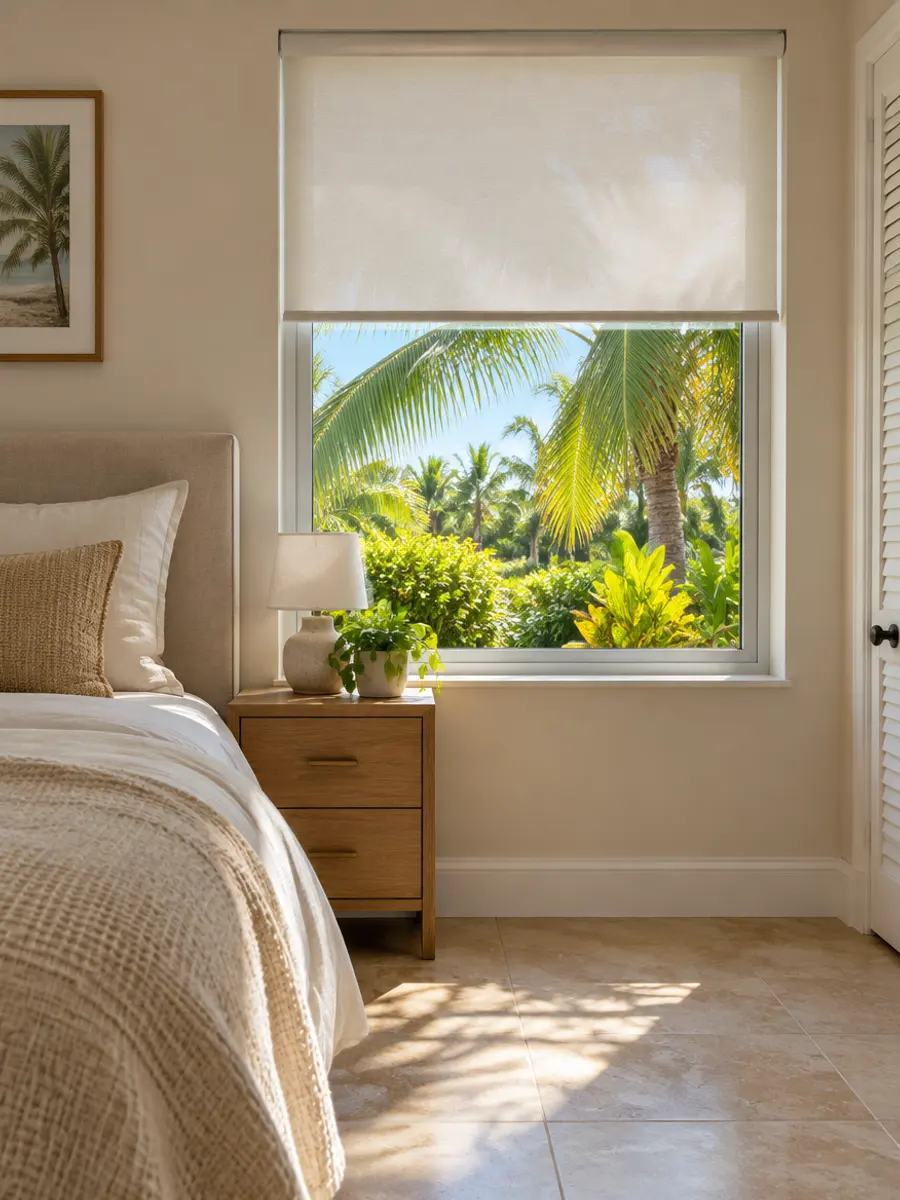
In practice that means the back of your window treatment has to be white or close to it, while you choose whatever you like on the room side. A lined drapery panel and most roller shades handle this without compromise. It is worth checking your own rules before the appointment, and we will ask.